
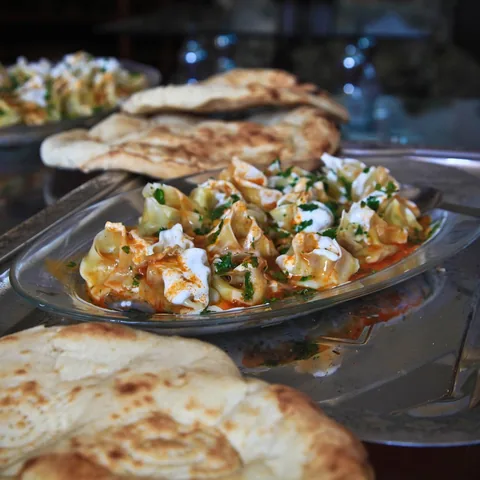
Kofta challow (Afghan meatballs with rice)
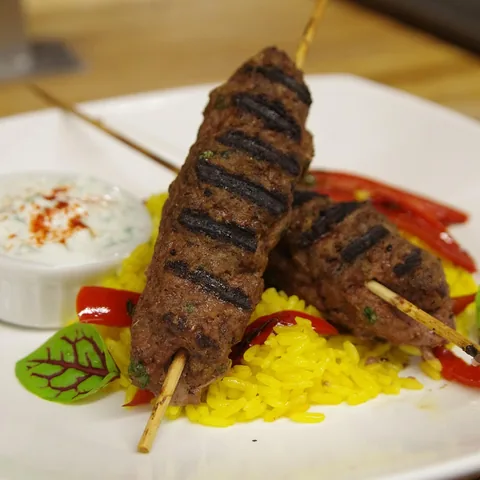
Kofta challow is a family Sunday dish of large spiced meatballs cooked in a tomato and onion sauce. The sauce is rich and gently sour, with turmeric and black pepper in the background. It is served with white rice, flatbread and a plate of fresh onion, radish and herbs.
Diets
Allergens
None of the 14 major allergens in a typical recipe.
What it is made of
Recipe
Ingredients
- 500 g minced beef
- 1 onion (150 g), grated
- 400 g tomatoes, crushed
- 3 garlic cloves
- 1 tsp turmeric, salt, pepper
- 300 g rice, cooked as challow
Method
- Mix beef with half the grated onion, salt, pepper and turmeric and knead until sticky.
- Shape the mixture into eight large balls.
- Fry the remaining onion in 3 tbsp oil until golden, add garlic and tomatoes.
- Add 250 ml water and simmer 10 minutes, then lower the meatballs in.
- Cover and cook gently 30 minutes, turning once, until the sauce thickens.
- Serve over steamed rice.
How to make it lighter
- Use lean beef and skim the oil from the sauce.
- Swap half the rice for a green salad.
- Bake the meatballs instead of browning them in oil.
History
Challow, rice cooked until each grain is separate, is the classic base for Afghan stews and meat dishes. Meatballs in sauce are common across Persian-influenced cooking, and the Afghan version is usually milder than its neighbours.
Count it in one photo
Point your camera at the table — Me Nutrition recognises Kofta challow (Afghan meatballs with rice) and every other dish, with calories and macros for each. Ate only half? Slide it.
Download on the App StoreSimilar dishes
Values are estimates per 100 g for a typical recipe; home and restaurant versions vary. Diets and allergens are worked out from the ingredients of a typical recipe — always check with whoever cooked the dish. Not medical advice. Nutrition data: Me Nutrition dish database v15. How we count →