
Akara (black-eyed pea fritters)
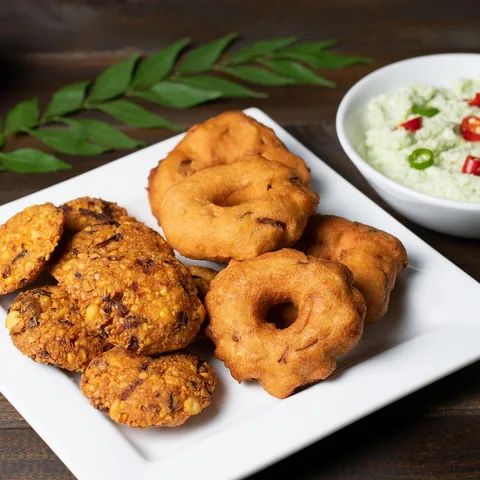
Akara are golden fritters with a crisp crust and a light, fluffy inside, made from peeled black-eyed peas whipped into a paste with onion and hot pepper. They taste savory and slightly peppery. Nigerians eat them for breakfast with pap or bread, or as a snack from street vendors.
Diets
Allergens
None of the 14 major allergens in a typical recipe.
What it is made of
Recipe
Ingredients
- 300 g black-eyed peas
- 1 onion (120 g)
- 1 scotch bonnet pepper
- 1 tsp salt
- about 100 ml water
- 500 ml oil for frying
Method
- Soak the beans, rub off skins and rinse until the water runs clear.
- Blend with onion, pepper and a little water into a thick paste.
- Whip the paste by hand or with a mixer for several minutes until airy.
- Season with salt.
- Heat oil to medium-high and drop in spoonfuls of paste.
- Fry, turning, until deep golden, then drain on paper.
How to make it lighter
- Drain well on paper to remove excess oil.
- Bake spoonfuls at 220 C for a lighter version.
- Serve with tomatoes and cucumber rather than fried bread.
History
Akara is an old West African bean fritter, popular among the Yoruba and carried across the Atlantic to Brazil, where a related version is called acarajé. It is usually fried in hot oil in the morning and eaten while still warm.
Count it in one photo
Point your camera at the table — Me Nutrition recognises Akara (black-eyed pea fritters) and every other dish, with calories and macros for each. Ate only half? Slide it.
Download on the App StoreSimilar dishes

Values are estimates per 100 g for a typical recipe; home and restaurant versions vary. Diets and allergens are worked out from the ingredients of a typical recipe — always check with whoever cooked the dish. Not medical advice. Nutrition data: Me Nutrition dish database v15. How we count →