
Niños envueltos (stuffed cabbage rolls)
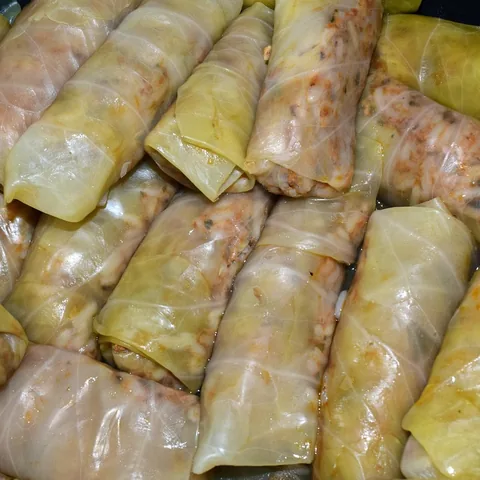
Niños envueltos, literally wrapped children, are soft cabbage leaves rolled around a mixture of minced beef, rice, onion and egg. The rolls are packed tightly in a pot and simmered in tomato sauce until the leaves are silky and the filling is cooked through. They are mild and homely, served with plenty of sauce and often with mashed potatoes.
Diets
Allergens
Contains (in a typical recipe):
What it is made of
Recipe
Ingredients
- 1 large cabbage (about 1.2 kg)
- 500 g minced beef
- 120 g raw rice
- 1 onion (150 g), finely chopped
- 1 egg
- 700 ml tomato sauce
- 200 ml water or broth
- Salt, pepper, nutmeg
Method
- Core the cabbage and blanch it in boiling water, peeling off leaves as they soften.
- Mix the beef, rice, onion, egg, salt, pepper and nutmeg.
- Place a spoonful of filling on each leaf, fold in the sides and roll up tightly.
- Line a pot with spare leaves and pack the rolls seam side down.
- Pour over the tomato sauce and water, cover and simmer gently for 50–60 minutes.
- Let rest 10 minutes and serve with the sauce.
How to make it lighter
- Choose lean minced beef or mix it half and half with minced chicken.
- Use brown rice or replace part of the rice with grated carrot.
- Serve with a salad rather than mashed potatoes.
History
Stuffed cabbage reached Argentina with immigrants from Central and Eastern Europe as well as the Middle East, and the local name for the dish is playful. It is now a common family recipe across the country.
Count it in one photo
Point your camera at the table — Me Nutrition recognises Niños envueltos (stuffed cabbage rolls) and every other dish, with calories and macros for each. Ate only half? Slide it.
Download on the App StoreSimilar dishes
Values are estimates per 100 g for a typical recipe; home and restaurant versions vary. Diets and allergens are worked out from the ingredients of a typical recipe — always check with whoever cooked the dish. Not medical advice. Nutrition data: Me Nutrition dish database v15. How we count →