
Pastafrola
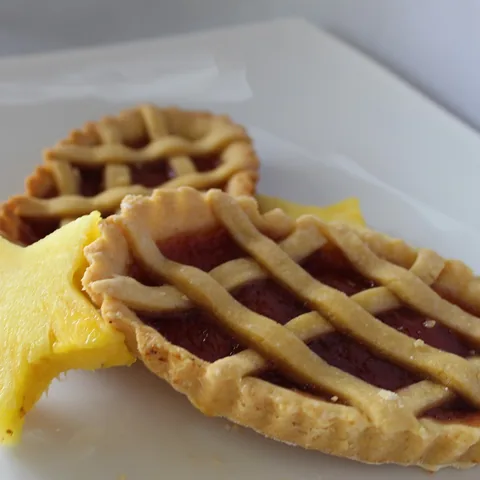
Pastafrola is a round tart with a buttery shortcrust base, a thick layer of quince paste and a lattice of pastry strips on top. The crust is tender and lightly lemony, while the filling is dense, fruity and sweet. Argentines eat it in the afternoon with mate or coffee. Sweet-potato paste or dulce de leche are common alternative fillings.
Diets
Allergens
Contains (in a typical recipe):
What it is made of
Recipe
Ingredients
- 300 g flour
- 150 g cold butter
- 100 g sugar
- 1 egg and 1 yolk
- Zest of 1 lemon
- 1 tsp baking powder
- 500 g quince paste
- 50 ml water
Method
- Rub the butter into flour, sugar, baking powder and zest, then add the eggs and bring together; chill 30 minutes.
- Melt the quince paste with the water into a thick, spreadable purée and let it cool.
- Roll two thirds of the dough and line a 24 cm tart tin.
- Spread the quince filling and cover with a lattice of dough strips.
- Bake at 180 °C for 35–40 minutes until golden and cool before cutting.
How to make it lighter
- Use part wholemeal flour for more fibre.
- Thin the quince paste with grated apple to reduce sugar.
- One small slice of 60–70 g goes well with an unsweetened mate.
History
The tart came to Argentina with Italian immigrants and is a cousin of the Italian crostata; its name comes from 'pasta frolla', the Italian word for shortcrust. It is now a standard item in every Argentine bakery.
Count it in one photo
Point your camera at the table — Me Nutrition recognises Pastafrola and every other dish, with calories and macros for each. Ate only half? Slide it.
Download on the App StoreSimilar dishes
Values are estimates per 100 g for a typical recipe; home and restaurant versions vary. Diets and allergens are worked out from the ingredients of a typical recipe — always check with whoever cooked the dish. Not medical advice. Nutrition data: Me Nutrition dish database v15. How we count →