
Puchero (Argentine beef and vegetable boil)
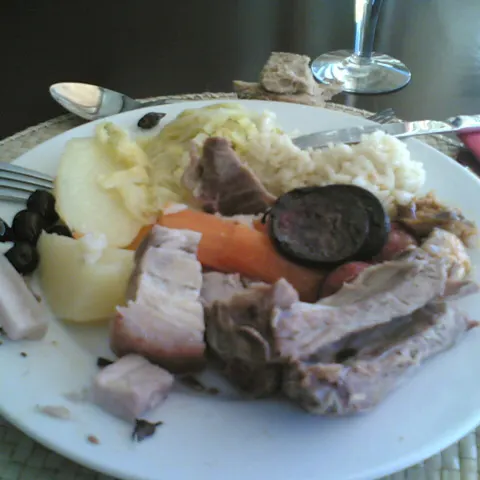
Puchero is a generous boiled dinner: beef shank or brisket simmers slowly with potatoes, carrots, squash, corn, cabbage and chickpeas. The broth is often served first as a soup with rice or noodles, and the meat and vegetables follow on a platter with olive oil and salt. It is simple, clean-tasting and very warming in winter.
Diets
Allergens
None of the 14 major allergens in a typical recipe.
What it is made of
Recipe
Ingredients
- 1.2 kg beef shank or brisket on the bone
- 400 g potatoes
- 300 g carrots
- 400 g squash
- 2 ears of corn
- 1/4 cabbage (300 g)
- 200 g cooked chickpeas
- 1 onion, 2 celery stalks, 1 leek
- 3 l water
Method
- Cover the beef with cold water, bring to a boil and skim off the foam.
- Add onion, celery and leek and simmer gently for 1.5–2 hours.
- Add carrots and corn, then after 10 minutes add potatoes and squash.
- Add cabbage wedges and chickpeas for the last 15 minutes.
- Strain off some broth to serve as a soup with rice or fine noodles.
- Arrange meat and vegetables on a platter and dress with olive oil and salt.
How to make it lighter
- Chill the broth and lift off the solid fat before reheating.
- Skip the blood sausage and pork belly that richer versions include.
- Fill most of the plate with vegetables and chickpeas.
History
Puchero descends from the Spanish cocido and olla podrida, adapted in Argentina with local beef and native vegetables such as corn and squash. It became a standard family meal, especially in cold months.
Count it in one photo
Point your camera at the table — Me Nutrition recognises Puchero (Argentine beef and vegetable boil) and every other dish, with calories and macros for each. Ate only half? Slide it.
Download on the App StoreSimilar dishes
Values are estimates per 100 g for a typical recipe; home and restaurant versions vary. Diets and allergens are worked out from the ingredients of a typical recipe — always check with whoever cooked the dish. Not medical advice. Nutrition data: Me Nutrition dish database v15. How we count →