
Kololak (Armenian meatballs in broth)
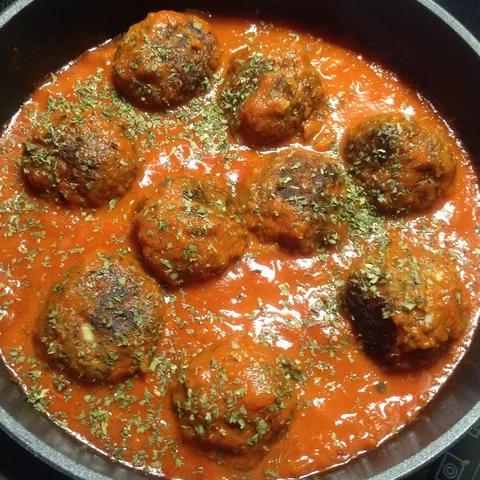
Kololak are generous meatballs, about the size of a fist, made from finely ground beef bound with egg and a little rice and seasoned with herbs. They are poached gently in water or stock, which turns into a light broth around them. The meatballs come out soft and juicy and are served in bowls with the broth and plenty of greens.
Diets
Allergens
Contains (in a typical recipe):
What it is made of
Recipe
Ingredients
- 600 g minced beef
- 60 g rice, rinsed
- 1 onion, grated
- 1 egg
- 1.5 litres light broth or water
- 3 tbsp chopped parsley and cilantro
- Salt and pepper
Method
- Knead the beef with onion, egg, rice, salt and pepper until smooth and sticky.
- With wet hands shape 8 large balls, pressing them firmly.
- Bring the broth to a simmer and lower the meatballs in gently.
- Cook at a bare simmer for 40-45 minutes, skimming any foam.
- Taste the broth and adjust the seasoning.
- Serve in bowls with broth and sprinkle generously with herbs.
How to make it lighter
- Use lean beef or mix in minced chicken breast.
- Skim the fat off the broth before serving.
- Add carrots and potatoes to the pot for a complete one-bowl meal.
History
Meatballs simmered in broth are a long-standing part of Armenian home cooking and a familiar family dinner. Regional versions differ in size and in whether rice, bulgur or split peas go into the mixture.
Count it in one photo
Point your camera at the table — Me Nutrition recognises Kololak (Armenian meatballs in broth) and every other dish, with calories and macros for each. Ate only half? Slide it.
Download on the App StoreSimilar dishes
Values are estimates per 100 g for a typical recipe; home and restaurant versions vary. Diets and allergens are worked out from the ingredients of a typical recipe — always check with whoever cooked the dish. Not medical advice. Nutrition data: Me Nutrition dish database v15. How we count →