
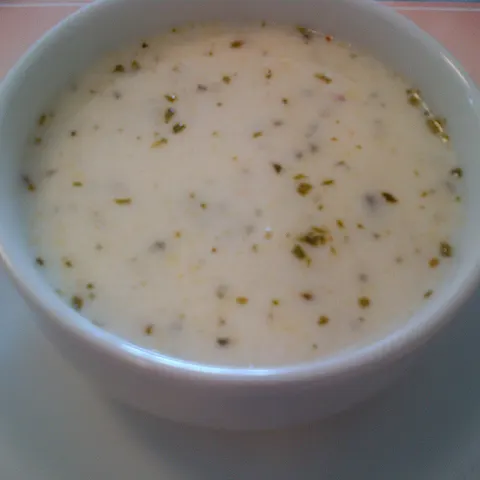
Matsun (Armenian cultured yogurt)

Matsun, also spelled mazoon, is the everyday yogurt of Armenia: thick enough to hold a spoon, pleasantly sour and very fresh-tasting. It is eaten on its own with honey or herbs, poured over dumplings and noodles, and used as the base for soups and drinks. Many families keep a spoon of the previous batch to start the next one.
Diets
Allergens
Contains (in a typical recipe):
What it is made of
Recipe
Ingredients
- 1 l whole milk
- 2 tbsp matsun or live plain yogurt as starter
Method
- Bring the milk to a boil, then let it cool to about 40–45 °C (warm to a finger).
- Mix the starter with a little of the warm milk until smooth.
- Stir the starter into the rest of the milk.
- Cover the pot and wrap it in a towel or blanket to keep it warm.
- Leave undisturbed for 6–8 hours until set.
- Refrigerate for at least 2 hours before eating; keep 2 tablespoons as starter for next time.
How to make it lighter
- Make it with semi-skimmed milk for fewer calories; it will be slightly thinner.
- Eat it plain with fresh herbs or cucumber instead of sweetening it.
- Use it in place of sour cream or mayonnaise in sauces and dressings.
History
Fermented milk has been part of the diet of pastoral peoples in the Caucasus for a very long time. Matsun is considered a national food in Armenia and is closely related to Georgian matsoni.
Count it in one photo
Point your camera at the table — Me Nutrition recognises Matsun (Armenian cultured yogurt) and every other dish, with calories and macros for each. Ate only half? Slide it.
Download on the App StoreSimilar dishes



Values are estimates per 100 g for a typical recipe; home and restaurant versions vary. Diets and allergens are worked out from the ingredients of a typical recipe — always check with whoever cooked the dish. Not medical advice. Nutrition data: Me Nutrition dish database v15. How we count →