
Asam laksa (Penang sour fish noodle soup)
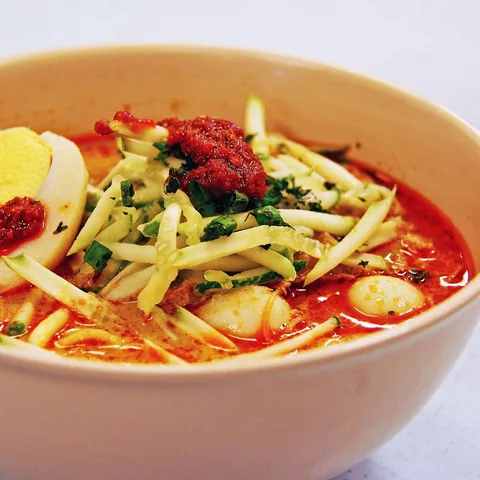
Penang asam laksa is a sour, spicy and refreshing noodle soup. Flaked mackerel is simmered with tamarind, lemongrass and chilies to give a thin, tangy broth, then poured over thick rice noodles. It is crowned with cucumber, pineapple, red onion, mint and a swirl of sweet shrimp paste.
Diets
Allergens
Contains (in a typical recipe):
What it is made of
Recipe
Ingredients
- 300 g mackerel
- 300 g thick rice noodles
- 1 litre water
- 3 tbsp tamarind pulp
- 2 lemongrass stalks
- 4 dried chilies
- 1 tbsp shrimp paste
- cucumber, pineapple, red onion, mint
Method
- Poach the mackerel in water with tamarind and lemongrass for 10 minutes.
- Remove the fish, flake it and discard the bones.
- Blend chilies, shallots and shrimp paste; simmer the paste in the broth 20 minutes.
- Return the flaked fish and season with salt and a little sugar.
- Cook the noodles, add to bowls, ladle the broth and add the toppings.
How to make it lighter
- The broth is naturally low in fat; skip extra shrimp paste to cut sodium.
- Load up on cucumber and pineapple.
- Use fewer noodles and more vegetables.
History
Asam laksa is a signature street dish of Penang and is often listed among the island's best-loved foods. The sour note comes from asam, the tamarind or garcinia used across Malay cooking.
Count it in one photo
Point your camera at the table — Me Nutrition recognises Asam laksa (Penang sour fish noodle soup) and every other dish, with calories and macros for each. Ate only half? Slide it.
Download on the App StoreSimilar dishes


Values are estimates per 100 g for a typical recipe; home and restaurant versions vary. Diets and allergens are worked out from the ingredients of a typical recipe — always check with whoever cooked the dish. Not medical advice. Nutrition data: Me Nutrition dish database v15. How we count →