
Dushbara (Azerbaijani dumpling soup)
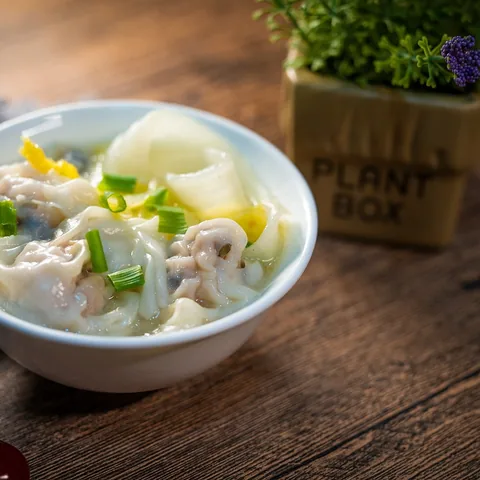
Dushbara are tiny dumplings, no bigger than a fingernail, filled with minced lamb and onion and cooked in a clear lamb broth. A good cook fits ten or more on one spoon. The soup is seasoned at the table with dried mint and vinegar mixed with crushed garlic, which gives it a bright, tangy finish.
Diets
Allergens
Contains (in a typical recipe):
What it is made of
Recipe
Ingredients
- 300 g flour
- 1 egg, 120 ml water, salt
- 300 g minced lamb
- 1 onion (150 g)
- 2 l lamb or bone broth
- 2 tsp dried mint
- 2 tbsp vinegar with 3 crushed garlic cloves
Method
- Knead flour, egg, water and salt into a stiff dough and rest it 20 minutes.
- Mix lamb with very finely chopped onion, salt and pepper.
- Roll the dough thin, cut into 2 cm squares and put a pea of filling on each.
- Fold into triangles and pinch the corners together into tiny rings.
- Simmer in the broth for 5–7 minutes and serve with dried mint and garlic vinegar.
How to make it lighter
- Skim the fat off the broth before cooking the dumplings.
- Use lean minced lamb or beef.
- Make a larger bowl of broth with fewer dumplings for a lighter meal.
History
Dushbara is a classic of Azerbaijani home cooking, and making the tiny dumplings is often a shared family task. Small broth dumplings of this kind are found from the Caucasus to Central Asia.
Count it in one photo
Point your camera at the table — Me Nutrition recognises Dushbara (Azerbaijani dumpling soup) and every other dish, with calories and macros for each. Ate only half? Slide it.
Download on the App StoreSimilar dishes
Values are estimates per 100 g for a typical recipe; home and restaurant versions vary. Diets and allergens are worked out from the ingredients of a typical recipe — always check with whoever cooked the dish. Not medical advice. Nutrition data: Me Nutrition dish database v15. How we count →