
Tava kabab (pan kebab with eggs)
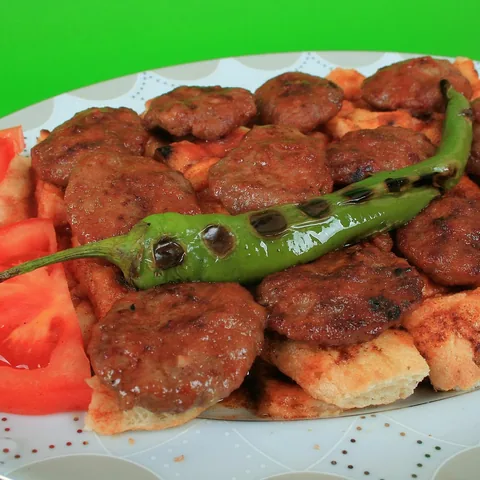
Tava kabab is a home-style kebab made without a grill. Minced lamb with onion and spices is shaped into small flat patties and fried in butter in a wide pan called a tava. Beaten eggs, often tinted yellow with turmeric or saffron, are poured over at the end and set around the meat. It is served straight from the pan with bread and pickles.
Diets
Allergens
Contains (in a typical recipe):
What it is made of
Recipe
Ingredients
- 600 g minced lamb
- 1 onion (150 g)
- 4 eggs
- 30 g butter
- 0.5 tsp turmeric
- salt, black pepper, herbs
Method
- Mix the lamb with grated, squeezed onion, salt and pepper and shape into 12 small flat patties.
- Fry them in butter in a wide pan for 4 minutes per side.
- Beat the eggs with turmeric and a pinch of salt.
- Pour the eggs around the patties, cover and cook on low heat 4–5 minutes until set.
- Sprinkle with herbs and serve from the pan.
How to make it lighter
- Use a non-stick pan and a teaspoon of oil instead of butter.
- Replace two whole eggs with egg whites.
- Serve with a big tomato and cucumber salad.
History
Tava is the Azerbaijani name for a shallow frying pan, which gives the dish its name. It is a practical version of kebab for cooking indoors.
Count it in one photo
Point your camera at the table — Me Nutrition recognises Tava kabab (pan kebab with eggs) and every other dish, with calories and macros for each. Ate only half? Slide it.
Download on the App StoreSimilar dishes
Values are estimates per 100 g for a typical recipe; home and restaurant versions vary. Diets and allergens are worked out from the ingredients of a typical recipe — always check with whoever cooked the dish. Not medical advice. Nutrition data: Me Nutrition dish database v15. How we count →