
Tika kabab (Azerbaijani lamb shashlik)
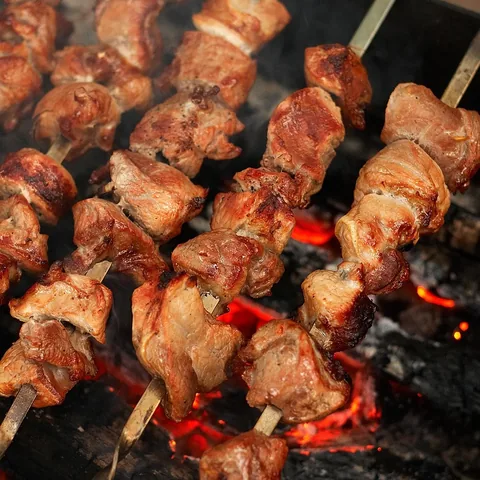
Tika kabab is the classic Azerbaijani skewer of lamb pieces. The meat, often from the leg or loin, is marinated for a few hours with grated onion, salt and pepper, then threaded on skewers, sometimes with small pieces of tail fat between them. It is grilled over embers and served with raw onion, sumac, herbs and grilled tomatoes and peppers.
Diets
Allergens
None of the 14 major allergens in a typical recipe.
What it is made of
Recipe
Ingredients
- 1 kg lamb leg, cut in 4 cm chunks
- 2 onions (300 g)
- 1 tsp sumac
- 4 tomatoes and 4 peppers for grilling
- herbs, lavash
- salt, black pepper
Method
- Grate one onion and rub it with salt and pepper into the lamb.
- Marinate in the fridge for 3–4 hours.
- Thread the meat onto skewers, not too tightly.
- Grill over glowing coals for 12–15 minutes, turning often, with the vegetables alongside.
- Serve with sliced raw onion, sumac and herbs.
How to make it lighter
- Choose lean leg and skip the tail fat.
- Fill half the plate with grilled vegetables.
- Add a squeeze of lemon instead of fatty sauces.
History
Tika means piece or chunk, distinguishing it from minced lula kabab. Charcoal-grilled lamb is a fixture of Azerbaijani gatherings and roadside restaurants.
Count it in one photo
Point your camera at the table — Me Nutrition recognises Tika kabab (Azerbaijani lamb shashlik) and every other dish, with calories and macros for each. Ate only half? Slide it.
Download on the App StoreSimilar dishes
Values are estimates per 100 g for a typical recipe; home and restaurant versions vary. Diets and allergens are worked out from the ingredients of a typical recipe — always check with whoever cooked the dish. Not medical advice. Nutrition data: Me Nutrition dish database v15. How we count →