
Toyug plov (Azerbaijani chicken pilaf)
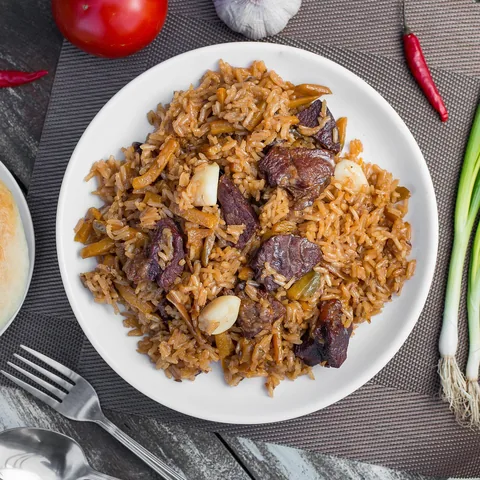
Toyug plov is an everyday yet festive Azerbaijani pilaf made with chicken. Steamed basmati is streaked with saffron and topped with pieces of chicken browned with onion, then softened with dried apricots, raisins and sometimes chestnuts. The fruit adds a gentle sweetness that suits the mild meat.
Diets
Allergens
Contains (in a typical recipe):
What it is made of
Recipe
Ingredients
- 500 g basmati rice
- 1 chicken (1.2 kg), jointed
- 2 onions (300 g)
- 100 g dried apricots
- 60 g raisins
- 70 g butter
- 0.5 g saffron, salt, turmeric
Method
- Soak the rice, parboil it for 6 minutes in salted water and drain.
- Steam it covered with a little butter on low heat for 35–40 minutes.
- Brown the chicken pieces with sliced onion in butter, add 150 ml water and simmer 30 minutes.
- Add the apricots and raisins and cook 10 minutes until plump.
- Drizzle saffron water over the rice and serve the chicken and fruit on top.
How to make it lighter
- Remove the chicken skin before cooking.
- Use half the dried fruit for less sugar.
- Serve with plain yogurt and a green salad.
History
Toyug means chicken in Azerbaijani. Chicken plov is a lighter, quicker relative of the lamb versions and appears at family meals and holiday tables, especially at Novruz.
Count it in one photo
Point your camera at the table — Me Nutrition recognises Toyug plov (Azerbaijani chicken pilaf) and every other dish, with calories and macros for each. Ate only half? Slide it.
Download on the App StoreSimilar dishes
Values are estimates per 100 g for a typical recipe; home and restaurant versions vary. Diets and allergens are worked out from the ingredients of a typical recipe — always check with whoever cooked the dish. Not medical advice. Nutrition data: Me Nutrition dish database v15. How we count →