
Bandeja paisa
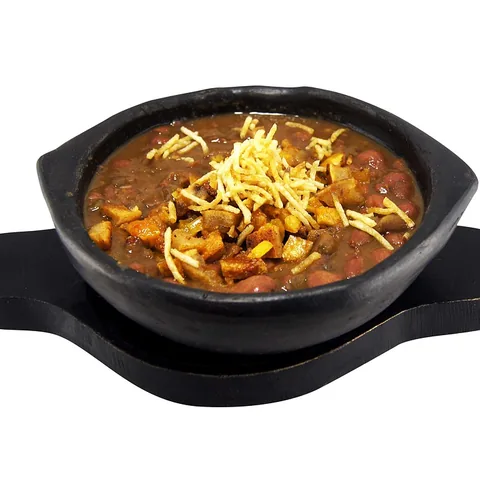
Bandeja paisa is the most famous plate of the Antioquia region: a big oval tray loaded with red beans, white rice, seasoned ground beef, crispy pork belly crackling, chorizo, a fried egg, ripe plantain, a small arepa and a slice of avocado. The beans are soft and smoky, the chicharrón crunchy, and the plantain adds sweetness. It is a midday meal meant to keep you going for hours, usually shared with hogao sauce and a cold juice.
Diets
Allergens
Contains (in a typical recipe):
What it is made of
Recipe
Ingredients
- 400 g cooked red beans
- 300 g white rice
- 300 g ground beef
- 300 g pork belly
- 4 chorizos
- 4 eggs
- 2 ripe plantains
- 1 avocado
- 4 small arepas
- 1 tomato and 1 scallion for hogao
Method
- Simmer the beans with a little hogao (tomato and scallion sautéed in oil) until thick and creamy.
- Cook the rice; season the ground beef with cumin and salt and brown it in a pan.
- Boil the pork belly strips for 20 minutes, then fry them in their own fat until crisp.
- Fry the chorizos and slices of ripe plantain until golden.
- Fry the eggs and warm the arepas.
- Arrange everything on large plates with avocado slices and serve at once.
How to make it lighter
- Share one platter between two people — a full bandeja easily passes 1,200 kcal.
- Grill the chorizo and skip the chicharrón to cut most of the fat.
- Ask for extra beans and avocado instead of double rice for more fibre.
History
The dish grew out of the hearty food of the paisa farmers and muleteers of the Colombian Andes, who needed lots of energy for hard work in the mountains. Today it is served across Colombia as a symbol of Antioquian cooking.
Count it in one photo
Point your camera at the table — Me Nutrition recognises Bandeja paisa and every other dish, with calories and macros for each. Ate only half? Slide it.
Download on the App StoreSimilar dishes
Values are estimates per 100 g for a typical recipe; home and restaurant versions vary. Diets and allergens are worked out from the ingredients of a typical recipe — always check with whoever cooked the dish. Not medical advice. Nutrition data: Me Nutrition dish database v15. How we count →