
Ilish bhapa (steamed hilsa in mustard)
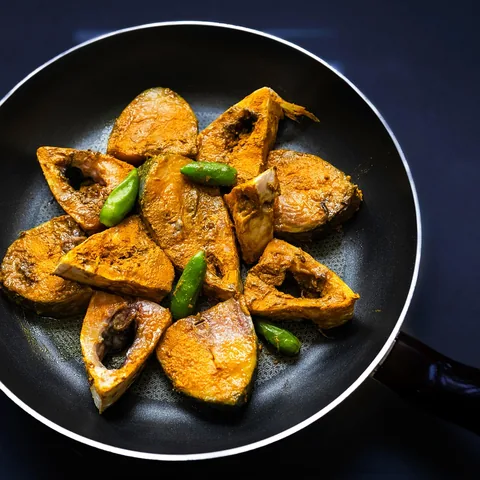
Ilish bhapa is hilsa steaks coated in ground mustard, turmeric, chilli and mustard oil, then steamed in a closed box. The fish stays moist and rich, and the mustard gives a sharp, almost nasal kick. It is eaten with plain steamed rice, taking care with the many fine bones.
Diets
Allergens
Contains (in a typical recipe):
What it is made of
Recipe
Ingredients
- 500 g hilsa steaks
- 3 tbsp mustard seeds, soaked and ground
- 4 tbsp mustard oil (60 ml)
- 4 green chillies
- 1 tsp turmeric, salt
Method
- Grind soaked mustard seeds with two chillies and a pinch of salt into a smooth paste.
- Mix the paste with turmeric, salt and mustard oil.
- Coat the fish steaks well in the mixture.
- Place in a lidded steel box or covered bowl with the remaining chillies.
- Steam over simmering water for 15-20 minutes and serve with rice.
How to make it lighter
- Soak mustard seeds in warm water to reduce bitterness.
- Use half the oil and let the mustard paste carry the flavour.
- Pair with steamed vegetables instead of extra rice.
History
Hilsa is the national fish of Bangladesh and is closely associated with Bengali celebrations and the monsoon season. Mustard preparations such as bhapa are among the best-known ways to cook it.
Count it in one photo
Point your camera at the table — Me Nutrition recognises Ilish bhapa (steamed hilsa in mustard) and every other dish, with calories and macros for each. Ate only half? Slide it.
Download on the App StoreSimilar dishes
Values are estimates per 100 g for a typical recipe; home and restaurant versions vary. Diets and allergens are worked out from the ingredients of a typical recipe — always check with whoever cooked the dish. Not medical advice. Nutrition data: Me Nutrition dish database v15. How we count →