
Banitsa (Bulgarian cheese filo pie)
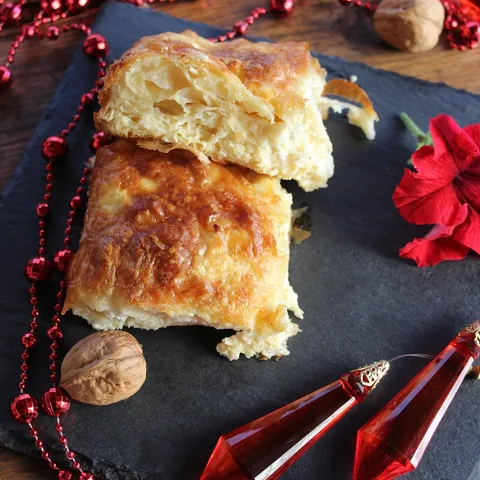
Banitsa is the everyday pastry of Bulgaria: sheets of thin dough are sprinkled with a mixture of eggs, yogurt and crumbled white cheese, coiled and baked until golden. It is crisp on top and soft and tangy inside. Bulgarians eat it warm for breakfast, often with plain yogurt or boza.
Diets
Allergens
Contains (in a typical recipe):
What it is made of
Recipe
Ingredients
- 10 sheets filo pastry (about 400 g)
- 4 eggs
- 250 g plain yogurt
- 250 g white brined cheese, crumbled
- 100 g butter, melted
- 1/2 tsp baking soda
Method
- Mix eggs, yogurt, cheese and baking soda for the filling.
- Brush a sheet of filo with butter and scatter some filling on it.
- Scrunch or roll the sheet into a loose rope and coil it into a buttered pan.
- Repeat with the remaining sheets until the pan is full.
- Pour the leftover filling and butter over the top.
- Bake at 190 C for 35-40 minutes until deep golden, then rest 10 minutes.
How to make it lighter
- Use low-fat white cheese and yogurt to cut the fat.
- Replace part of the butter with a light brushing of oil.
- Add spinach or leek to the filling for more vegetables.
History
Layered dough pies are common across the Balkans and the former Ottoman lands. In Bulgaria banitsa has become a national favourite and is also made at New Year with lucky charms hidden inside.
Count it in one photo
Point your camera at the table — Me Nutrition recognises Banitsa (Bulgarian cheese filo pie) and every other dish, with calories and macros for each. Ate only half? Slide it.
Download on the App StoreSimilar dishes
Values are estimates per 100 g for a typical recipe; home and restaurant versions vary. Diets and allergens are worked out from the ingredients of a typical recipe — always check with whoever cooked the dish. Not medical advice. Nutrition data: Me Nutrition dish database v15. How we count →