
Buckwheat porridge (hrachanaya kasha)
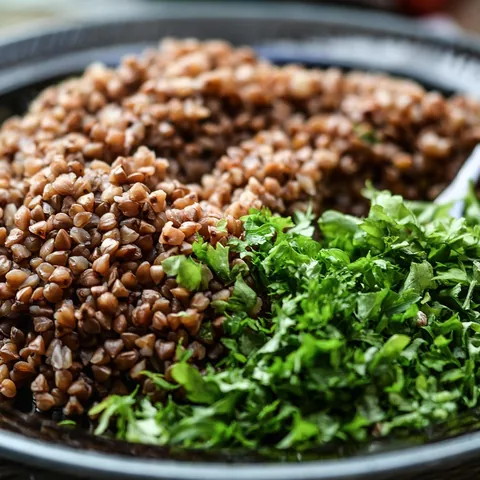
Hrachanaya kasha is buckwheat cooked until each grain is tender but separate, with a deep, toasty, slightly earthy flavour. It is served plain with a knob of butter, with milk for breakfast, or, most heartily, topped with crisp pieces of fried salo and golden onion. It is a standard side for meat, mushrooms and cutlets.
Diets
Allergens
Contains (in a typical recipe):
What it is made of
Recipe
Ingredients
- 300 g buckwheat groats
- 600 ml water
- 40 g butter
- 80 g salo or pork belly (optional)
- 1 onion
- Salt
Method
- Rinse the buckwheat and toast it in a dry pan for 3-4 minutes.
- Bring salted water to a boil, add the groats, cover and cook on low heat for 15-18 minutes.
- Turn off the heat and leave covered for 10 minutes.
- Meanwhile dice the salo and fry until crisp, then add chopped onion and fry until golden.
- Stir butter into the porridge.
- Serve topped with the salo and onion.
How to make it lighter
- Skip the salo and serve with sautéed mushrooms for a lighter meal.
- Use half the butter and add herbs.
- Buckwheat is naturally gluten-free and rich in fibre and minerals.
History
Buckwheat has been grown and eaten in the Belarusian lands for centuries and kasha is one of the oldest dishes of the region. It is still among the most common everyday sides in Belarusian homes and canteens.
Count it in one photo
Point your camera at the table — Me Nutrition recognises Buckwheat porridge (hrachanaya kasha) and every other dish, with calories and macros for each. Ate only half? Slide it.
Download on the App StoreSimilar dishes

Values are estimates per 100 g for a typical recipe; home and restaurant versions vary. Diets and allergens are worked out from the ingredients of a typical recipe — always check with whoever cooked the dish. Not medical advice. Nutrition data: Me Nutrition dish database v15. How we count →