
Tsibriki (fried potato dumplings with meat)
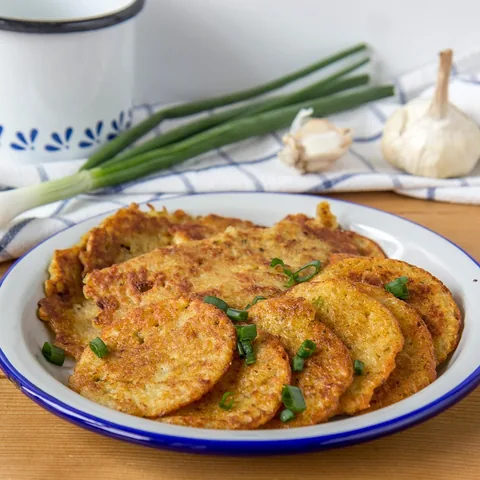
Tsibriki are a cousin of kolduny: a dough of finely grated raw potato, egg and a little flour is wrapped around a ball of seasoned minced meat and fried in plenty of oil. Outside they are crisp and golden, inside the potato is soft and the meat juicy. They are served hot with sour cream or a mushroom sauce.
Diets
Allergens
Contains (in a typical recipe):
What it is made of
Recipe
Ingredients
- 1 kg potatoes
- 400 g minced pork
- 1 onion
- 1 egg
- 2-3 tbsp flour
- Oil for frying, salt, pepper
Method
- Mix the minced meat with grated onion, salt and pepper.
- Finely grate the potatoes, squeeze out the liquid and let the starch settle; pour off the water and return the starch to the potato.
- Add the egg, flour and salt to the potato and mix into a sticky dough.
- With wet hands flatten a portion of dough, put a spoon of meat in the centre and seal into a ball.
- Fry in 1-2 cm of hot oil for 4-5 minutes per side, turning, until deep golden.
- Drain on paper and finish in a 180 °C oven for 10 minutes so the meat cooks through.
How to make it lighter
- Use lean minced turkey or chicken instead of pork.
- Pan-fry briefly and finish in the oven to use much less oil.
- Serve with yogurt-based sauce instead of sour cream.
History
Grated-potato dishes such as draniki, kolduny and tsibriki form the core of Belarusian home cooking, which developed around the potato after it spread widely in the 19th century. Tsibriki are one of the less famous but still well-known members of this family.
Count it in one photo
Point your camera at the table — Me Nutrition recognises Tsibriki (fried potato dumplings with meat) and every other dish, with calories and macros for each. Ate only half? Slide it.
Download on the App StoreSimilar dishes
Values are estimates per 100 g for a typical recipe; home and restaurant versions vary. Diets and allergens are worked out from the ingredients of a typical recipe — always check with whoever cooked the dish. Not medical advice. Nutrition data: Me Nutrition dish database v15. How we count →