
Tvarozhnik (farmer cheese casserole)
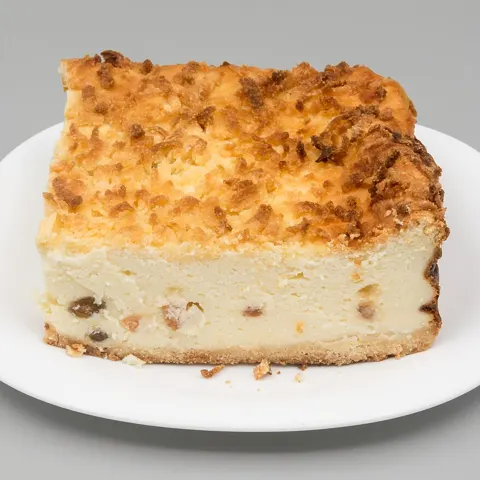
Tvarozhnik, or tvarozhnaya zapiakanka, is a simple bake of farmer cheese mixed with eggs, a little semolina and sugar, sometimes with raisins or grated apple. It comes out of the oven light and slightly puffed, with a tender, creamy inside and a golden top. Served warm or cold with sour cream, jam or fruit sauce, it is a favourite breakfast and nursery and school-canteen dish.
Diets
Allergens
Contains (in a typical recipe):
What it is made of
Recipe
Ingredients
- 600 g farmer cheese (tvorog)
- 3 eggs
- 60 g semolina
- 60 g sugar
- 100 g sour cream
- 20 g butter, pinch of salt, vanilla
Method
- Mash or press the farmer cheese through a sieve until smooth.
- Mix the semolina with the sour cream and leave for 15 minutes to swell.
- Beat the eggs with sugar, salt and vanilla, then combine with the cheese and semolina.
- Grease a baking dish with butter and spread the mixture evenly.
- Bake at 180 °C for 40-45 minutes until set and golden.
- Cool for 10 minutes before slicing; serve with sour cream or fruit.
How to make it lighter
- Use low-fat farmer cheese and yogurt instead of sour cream.
- Halve the sugar and add grated apple or berries for sweetness.
- Replace semolina with oat bran for more fibre.
History
Farmer cheese has always been plentiful in Belarus, a country with a strong dairy tradition, and baking it with eggs and grain was an easy way to make a nourishing meal. The casserole became a fixture of Soviet-era kindergarten and canteen menus and is still made at home.
Count it in one photo
Point your camera at the table — Me Nutrition recognises Tvarozhnik (farmer cheese casserole) and every other dish, with calories and macros for each. Ate only half? Slide it.
Download on the App StoreSimilar dishes


Values are estimates per 100 g for a typical recipe; home and restaurant versions vary. Diets and allergens are worked out from the ingredients of a typical recipe — always check with whoever cooked the dish. Not medical advice. Nutrition data: Me Nutrition dish database v15. How we count →