
Doce de leite (Brazilian milk caramel)
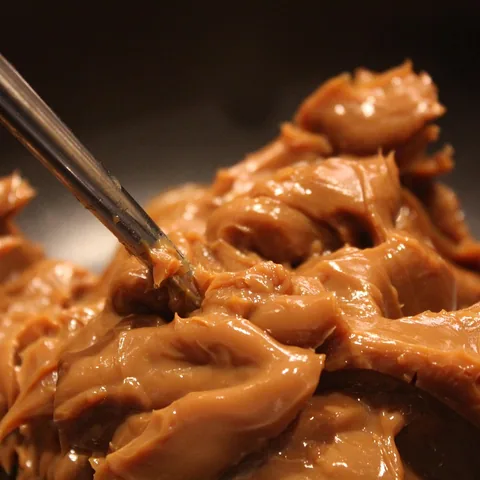
Doce de leite is made by simmering milk with sugar for a long time, stirring, until the water evaporates and the sugars caramelise into a thick, glossy, golden-brown cream. It is eaten by the spoonful, spread on bread, used to fill cakes and pastries, or paired with cheese. In Minas Gerais a firmer version is cut into small bars.
Diets
Allergens
Contains (in a typical recipe):
What it is made of
Recipe
Ingredients
- 2 litres whole milk
- 500 g sugar
- 1/2 tsp baking soda
- 1 tsp vanilla extract
Method
- Put the milk, sugar and baking soda in a wide, heavy pot.
- Bring to the boil, stirring, then lower the heat.
- Simmer for 2 to 2.5 hours, stirring regularly and more often as it thickens.
- When it turns golden brown and coats the spoon thickly, stir in the vanilla.
- Remove from the heat and keep stirring for a few minutes.
- Pour into sterilised jars and let cool.
How to make it lighter
- Use one tablespoon as a portion rather than a bowlful.
- Swirl a spoonful into plain yogurt instead of eating it straight.
- Semi-skimmed milk works but gives a slightly thinner result.
History
Milk caramel is shared by much of South America, where Argentines and Uruguayans know it as dulce de leche. In Brazil it is strongly linked to the dairy farms of Minas Gerais, where it has long been made in large copper pans over wood fires.
Count it in one photo
Point your camera at the table — Me Nutrition recognises Doce de leite (Brazilian milk caramel) and every other dish, with calories and macros for each. Ate only half? Slide it.
Download on the App StoreSimilar dishes
Values are estimates per 100 g for a typical recipe; home and restaurant versions vary. Diets and allergens are worked out from the ingredients of a typical recipe — always check with whoever cooked the dish. Not medical advice. Nutrition data: Me Nutrition dish database v15. How we count →