
Fish amok (Cambodian steamed fish curry)
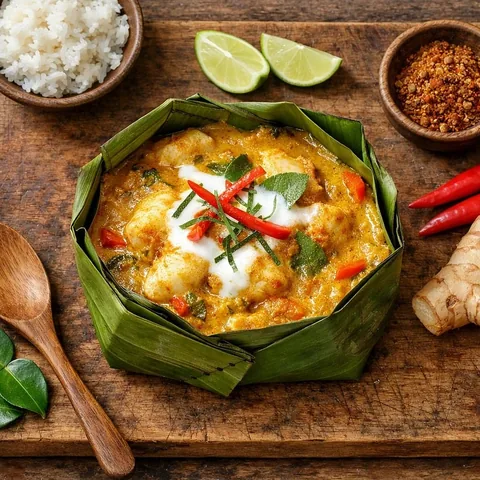
A soft, mousse-like fish curry made with coconut milk, egg and fragrant kroeung paste, steamed in banana-leaf cups. It is mild, creamy and aromatic rather than hot, and is served with steamed rice. It is often called Cambodia's national dish.
Diets
Allergens
Contains (in a typical recipe):
What it is made of
Recipe
Ingredients
- 500 g firm white fish fillets
- 250 ml coconut milk
- 3 tbsp kroeung paste
- 1 egg
- 1 tbsp fish sauce
- 1 tsp palm sugar
- kaffir lime leaves and banana leaves
Method
- Cut the fish into bite-sized pieces.
- Mix half the coconut milk with kroeung, egg, fish sauce and sugar.
- Fold in the fish and line small bowls with banana leaf.
- Fill with the mixture and steam for 25 minutes until set.
- Top with the remaining coconut milk and lime leaf slivers and steam 5 more minutes.
How to make it lighter
- Use light coconut milk for fewer calories.
- Add extra leafy greens under the fish.
- Serve with a small portion of rice and lots of vegetables.
History
Amok is a Khmer steamed curry traditionally made with freshwater fish. The kroeung paste of lemongrass, galangal and turmeric is the base of much Khmer cooking, and amok is a staple at celebrations and in restaurants.
Count it in one photo
Point your camera at the table — Me Nutrition recognises Fish amok (Cambodian steamed fish curry) and every other dish, with calories and macros for each. Ate only half? Slide it.
Download on the App StoreSimilar dishes
Values are estimates per 100 g for a typical recipe; home and restaurant versions vary. Diets and allergens are worked out from the ingredients of a typical recipe — always check with whoever cooked the dish. Not medical advice. Nutrition data: Me Nutrition dish database v15. How we count →