
Capirotada (Mexican Lenten bread pudding)
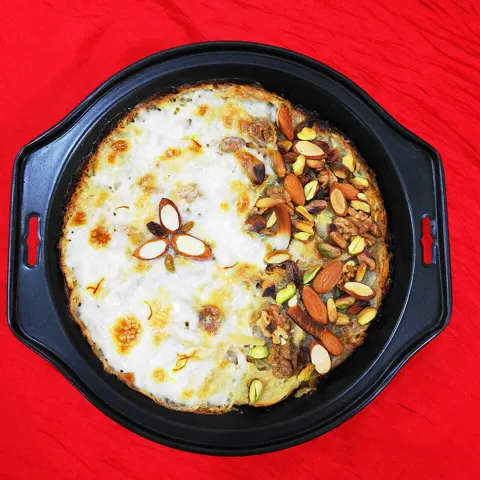
Capirotada is a baked dessert of toasted bolillo slices layered with cheese, raisins and peanuts or other nuts, then soaked in a syrup of piloncillo, cinnamon and clove. The result is sticky, sweet and slightly salty from the cheese, with crisp edges and a soft centre. It is the traditional sweet of Lent and Holy Week, eaten warm or at room temperature.
Diets
Allergens
Contains (in a typical recipe):
What it is made of
Recipe
Ingredients
- 4 day-old bolillos (300 g), sliced and toasted
- 200 g piloncillo
- 500 ml water
- 1 cinnamon stick, 3 cloves
- 150 g mild cheese, crumbled
- 60 g raisins
- 60 g peanuts
- 30 g butter
Method
- Simmer piloncillo, water, cinnamon and cloves for 15 minutes; strain.
- Brush the toasted bread lightly with butter.
- Layer bread, cheese, raisins and peanuts in a buttered dish, repeating the layers.
- Pour the warm syrup evenly over the top and let it soak 10 minutes.
- Cover and bake at 180 °C for 30 minutes, uncovering for the last 10.
How to make it lighter
- Cut the syrup sugar by a third; raisins add sweetness.
- Use whole-grain bread and skip the butter on the slices.
- Serve a small square; it is filling.
History
Capirotada has roots in Spanish bread dishes and became a fixture of Mexican Lenten cooking. Families keep their own versions, some adding banana, coconut or sprinkles on top.
Count it in one photo
Point your camera at the table — Me Nutrition recognises Capirotada (Mexican Lenten bread pudding) and every other dish, with calories and macros for each. Ate only half? Slide it.
Download on the App StoreSimilar dishes
Values are estimates per 100 g for a typical recipe; home and restaurant versions vary. Diets and allergens are worked out from the ingredients of a typical recipe — always check with whoever cooked the dish. Not medical advice. Nutrition data: Me Nutrition dish database v15. How we count →