
Carne en su jugo (beef in its own broth)
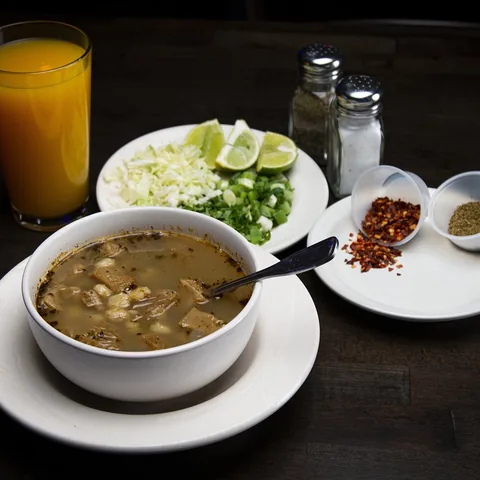
Carne en su jugo means 'meat in its juice': small pieces of thinly cut beef are cooked quickly in a light broth seasoned with tomatillo and chile. It is served in a deep bowl with pinto beans in their liquid, crumbled crisp bacon, and plenty of chopped onion, cilantro, radish and lime on top. It is hearty yet brothy, and eaten with warm tortillas.
Diets
Allergens
None of the 14 major allergens in a typical recipe.
What it is made of
Recipe
Ingredients
- 600 g beef sirloin, thinly sliced
- 150 g bacon
- 400 g cooked pinto beans with liquid
- 300 g tomatillos
- 1 onion (150 g)
- 1 bunch cilantro
- 1 l beef broth, salt, lime, radishes
Method
- Fry the bacon until crisp, crumble it and keep the fat in the pan.
- Blend the tomatillos with a little onion, garlic and broth.
- Sear the beef pieces quickly in the bacon fat.
- Pour in the tomatillo blend and the broth and simmer 15 minutes.
- Serve in bowls with the warm beans, bacon, chopped onion, cilantro, radish and lime.
How to make it lighter
- Use half the bacon and pour off its fat before searing.
- Choose lean sirloin or round.
- Load the bowl with radish and onion for crunch and volume.
History
The dish is a signature of Guadalajara, where several long-running restaurants have made it their speciality since the mid-20th century. It is one of the best-known dishes of Jalisco alongside birria and torta ahogada.
Count it in one photo
Point your camera at the table — Me Nutrition recognises Carne en su jugo (beef in its own broth) and every other dish, with calories and macros for each. Ate only half? Slide it.
Download on the App StoreSimilar dishes

Values are estimates per 100 g for a typical recipe; home and restaurant versions vary. Diets and allergens are worked out from the ingredients of a typical recipe — always check with whoever cooked the dish. Not medical advice. Nutrition data: Me Nutrition dish database v15. How we count →