
Churchkhela
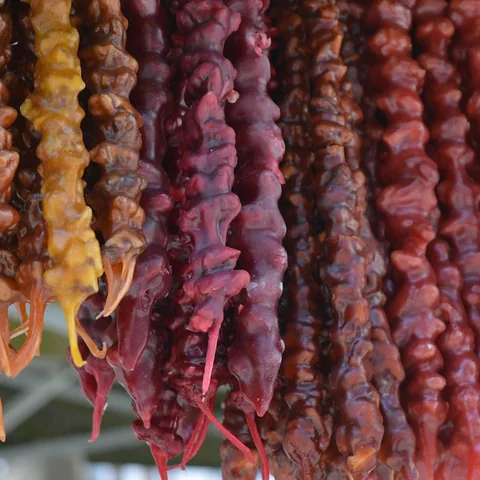
Churchkhela looks like a knobbly candle: a string of walnut halves wrapped in a thick, glossy layer of set grape must. The coating is chewy and fruity, while the nuts inside stay crunchy. It is sliced into rounds and eaten as a snack, with tea, or packed for long journeys.
Diets
Allergens
Contains (in a typical recipe):
What it is made of
Recipe
Ingredients
- 300 g walnut halves
- 1.5 l unsweetened grape juice
- 150 g flour
- Strong thread and a needle
Method
- Thread the walnut halves onto 25–30 cm strings, tying a loop at the top.
- Whisk the flour into 500 ml of cold juice until smooth.
- Bring the remaining juice to a simmer, then stir in the flour mixture and cook, stirring, until thick like custard (about 15 min).
- Dip each nut string into the hot mixture, let it drip, hang for 10 minutes and repeat 3–4 times.
- Hang in a dry, airy place for 5–7 days until the coating is firm but still pliable.
How to make it lighter
- Use juice without added sugar: grape must is sweet enough on its own.
- Cut into thin slices and treat one piece as a portion; it is very energy-dense.
- Hazelnuts work instead of walnuts if you want a slightly lighter, milder version.
History
It is a traditional product of the grape harvest, when fresh must is plentiful in Georgian villages. Hanging bunches of churchkhela are a familiar sight at markets and roadside stalls, and the sweet has long been valued as a durable, energy-rich food.
Count it in one photo
Point your camera at the table — Me Nutrition recognises Churchkhela and every other dish, with calories and macros for each. Ate only half? Slide it.
Download on the App StoreSimilar dishes
Values are estimates per 100 g for a typical recipe; home and restaurant versions vary. Diets and allergens are worked out from the ingredients of a typical recipe — always check with whoever cooked the dish. Not medical advice. Nutrition data: Me Nutrition dish database v15. How we count →