
Calentado (Colombian rice and beans breakfast)
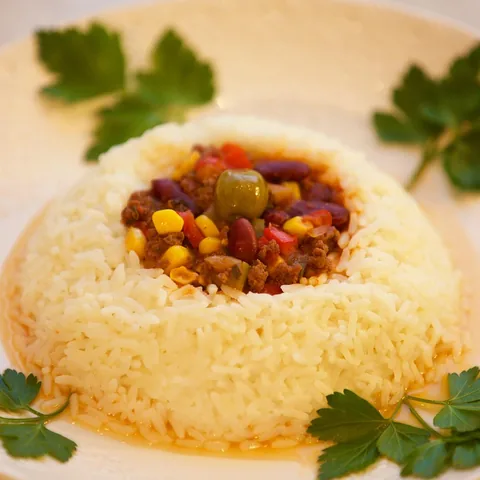
Calentado, literally "reheated", is a hearty breakfast made by frying the previous day's rice and beans together with hogao until the edges turn slightly crisp. It is topped with a fried egg and comes with an arepa, often with avocado, a piece of sausage or a cup of hot chocolate. The flavor is homely and savory, and it keeps people full until lunch.
Diets
Allergens
Contains (in a typical recipe):
What it is made of
Recipe
Ingredients
- 300 g cooked white rice (day-old)
- 250 g cooked red beans with a little broth
- 1 small onion and 1 tomato, chopped
- 1 tbsp oil
- 2 eggs
- 2 small corn arepas
- Salt and cumin
Method
- Heat the oil and fry the onion and tomato with a pinch of cumin for 5 minutes.
- Add the beans and let them bubble for a minute.
- Stir in the rice and fry, turning, until hot and slightly crisp, 6-8 minutes.
- Fry the eggs separately.
- Warm or grill the arepas.
- Serve the calentado with an egg on top and an arepa on the side.
How to make it lighter
- Cook the egg in a non-stick pan with no oil, or poach it.
- Skip sausage or chicharrón and add avocado and tomato instead.
- Use more beans and less rice for extra protein and fiber.
History
The dish grew out of the habit of not wasting leftovers in Colombian homes, especially in Antioquia and Bogotá. Today many restaurants serve calentado on their breakfast menus.
Count it in one photo
Point your camera at the table — Me Nutrition recognises Calentado (Colombian rice and beans breakfast) and every other dish, with calories and macros for each. Ate only half? Slide it.
Download on the App StoreSimilar dishes

Values are estimates per 100 g for a typical recipe; home and restaurant versions vary. Diets and allergens are worked out from the ingredients of a typical recipe — always check with whoever cooked the dish. Not medical advice. Nutrition data: Me Nutrition dish database v15. How we count →