
Colombian morcilla (rellena)
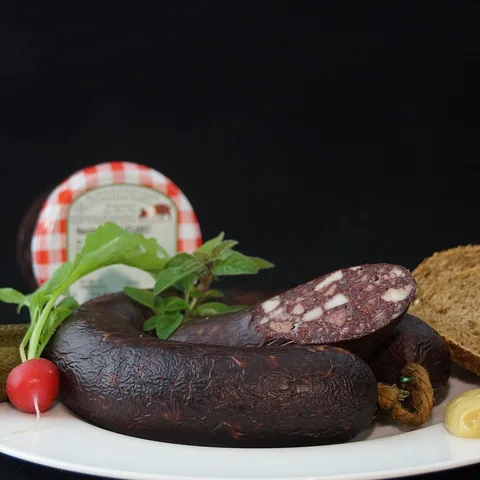
Colombian morcilla, often called rellena, is a blood sausage packed with cooked rice, peas and green onion. It is boiled and then sliced and fried until the casing crisps. The taste is earthy and savory, softened by the rice. It is eaten with arepas, potatoes and lime in fritanga platters.
Diets
Allergens
None of the 14 major allergens in a typical recipe.
What it is made of
Recipe
Ingredients
- 1 l fresh pork blood
- 300 g cooked rice
- 150 g green peas
- 100 g scallions, chopped
- 1 onion, chopped
- 150 g pork fat, diced
- 1 tsp cumin, 1 tsp salt, pepper
- 2 m natural pork casing
Method
- Strain the blood and stir in a little salt so it does not clot.
- Mix in rice, peas, scallions, onion, fat and spices.
- Fill the rinsed casings loosely and tie into links.
- Simmer in barely bubbling water for 30-40 minutes, pricking any air bubbles.
- Cool, then slice and pan-fry until crisp.
- Serve with arepa and lime.
How to make it lighter
- Grill slices instead of frying to drop fat.
- Eat one piece with salad rather than a full fritanga.
- Add more vegetables and less fat to the filling.
History
Blood sausages came to the Americas with the Spanish, and Colombia developed a version bulked out with rice and vegetables. It is a classic of Sunday family meals and roadside grills in the Andean regions.
Count it in one photo
Point your camera at the table — Me Nutrition recognises Colombian morcilla (rellena) and every other dish, with calories and macros for each. Ate only half? Slide it.
Download on the App StoreSimilar dishes
Values are estimates per 100 g for a typical recipe; home and restaurant versions vary. Diets and allergens are worked out from the ingredients of a typical recipe — always check with whoever cooked the dish. Not medical advice. Nutrition data: Me Nutrition dish database v15. How we count →