
Crossing the bridge noodles (guoqiao mixian)
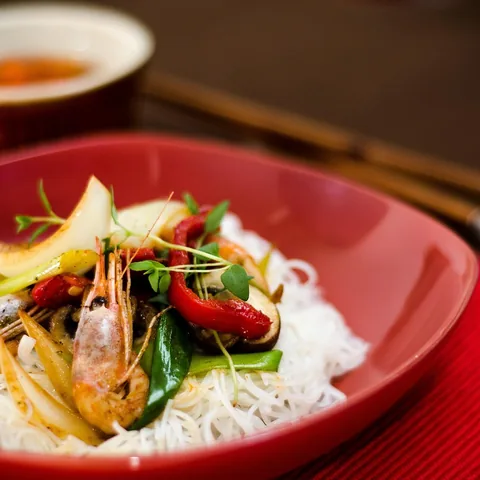
A big bowl of chicken broth, kept scalding hot under a thin oil layer, arrives with plates of raw sliced meat, quail egg, vegetables and rice noodles. You add them in order and they cook in seconds. The result is a clear, deeply flavoured meal that stays hot.
Diets
Allergens
Contains (in a typical recipe):
What it is made of
Recipe
Ingredients
- 300 g rice noodles
- 1 l strong chicken broth
- 100 g raw chicken or pork, thinly sliced
- 100 g fish slices
- 2 quail eggs
- 100 g greens
- 50 g tofu skin
- 2 scallions
- 1 tbsp oil
Method
- Bring the broth to a rolling boil and pour into a deep, heated bowl.
- Float a thin layer of oil on top to hold in heat.
- Slide in the eggs first, then the meat and fish slices.
- Add the greens and tofu skin.
- Add the noodles last and stir briefly.
- Top with scallion and eat at once.
How to make it lighter
- Slice meat very thinly so it cooks safely in the hot broth.
- Use only a thin film of oil.
- Fill the bowl with extra vegetables.
History
The name comes from a story of a scholar's wife who carried food across a bridge to her husband, keeping it hot with a layer of oil; it is a popular tale rather than documented history. The dish is now a symbol of Yunnan.
Count it in one photo
Point your camera at the table — Me Nutrition recognises Crossing the bridge noodles (guoqiao mixian) and every other dish, with calories and macros for each. Ate only half? Slide it.
Download on the App StoreSimilar dishes
Values are estimates per 100 g for a typical recipe; home and restaurant versions vary. Diets and allergens are worked out from the ingredients of a typical recipe — always check with whoever cooked the dish. Not medical advice. Nutrition data: Me Nutrition dish database v15. How we count →