
Danish pastry (Wienerbrød)
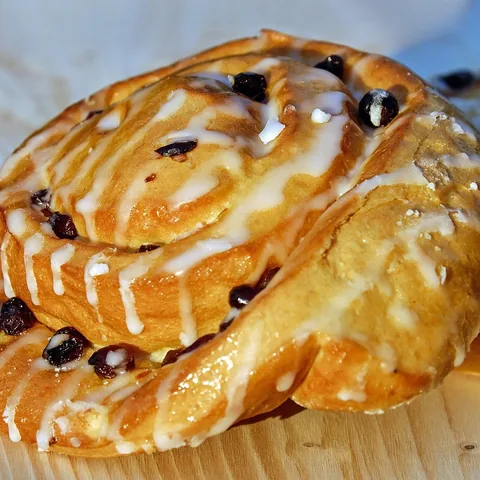
Wienerbrød is the Danish name for the flaky, buttery pastry known abroad as a Danish. Layers of yeast dough and butter bake into a crisp, golden shell around vanilla custard or a sweet remonce filling. It is eaten at breakfast or with coffee, usually with a light sugar glaze.
Diets
Allergens
Contains (in a typical recipe):
What it is made of
Recipe
Ingredients
- 300 g wheat flour
- 200 g butter
- 150 ml milk
- 1 pcs egg
- 40 g sugar
- 10 g yeast
- 150 g vanilla custard
- icing sugar
Method
- Mix flour, yeast, milk, egg, sugar and a pinch of salt into a smooth dough and chill.
- Roll out the dough, cover two thirds with cold butter slices and fold in three.
- Roll and fold twice more, chilling the dough for 30 minutes between folds.
- Roll to 5 mm, cut squares, fill the centers with custard and fold the corners over.
- Let the pastries rise for 40 minutes and brush with beaten egg.
- Bake at 200 C for 15 minutes until deep golden and glaze with icing.
How to make it lighter
- Make smaller pastries to control the portion.
- Fill with fresh fruit instead of extra remonce.
- Skip the sugar glaze for less added sugar.
History
The Danish name means Vienna bread, because Austrian bakers who came to Denmark in the nineteenth century brought the laminated dough technique. Danish bakers adapted it with more butter and local fillings.
Count it in one photo
Point your camera at the table — Me Nutrition recognises Danish pastry (Wienerbrød) and every other dish, with calories and macros for each. Ate only half? Slide it.
Download on the App StoreSimilar dishes



Values are estimates per 100 g for a typical recipe; home and restaurant versions vary. Diets and allergens are worked out from the ingredients of a typical recipe — always check with whoever cooked the dish. Not medical advice. Nutrition data: Me Nutrition dish database v15. How we count →