
Ecuadorian humitas
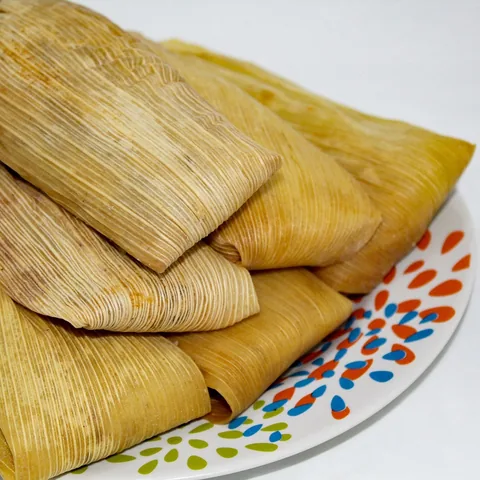
Humitas are soft cakes of freshly ground corn bound with eggs, butter and crumbled cheese, then steamed inside corn husks. The texture is moist and tender, somewhere between polenta and a savory pudding. In Ecuador they are a classic breakfast or late-afternoon snack, usually served with a cup of black coffee and sometimes a spoon of chili sauce.
Diets
Allergens
Contains (in a typical recipe):
What it is made of
Recipe
Ingredients
- 6 fresh corn cobs with husks (about 900 g kernels)
- 150 g fresh cheese, crumbled
- 2 eggs
- 80 g butter, softened
- 1 small onion, finely chopped
- 1 tsp baking powder, salt
Method
- Remove the husks carefully, keep the best ones and cut the kernels off the cobs.
- Grind the kernels to a coarse paste in a food processor.
- Sauté the onion in a little of the butter until soft.
- Beat the remaining butter with the eggs, then mix in the corn, onion, cheese, baking powder and salt.
- Place 2–3 tablespoons of batter on overlapping husks, fold into packets and tie.
- Steam standing upright for 40–45 minutes until firm, then rest 5 minutes.
How to make it lighter
- Replace half the butter with olive oil to cut saturated fat.
- Use a low-fat fresh cheese and an extra egg white.
- Serve one humita with a salad or fruit instead of two on their own.
History
Corn wrapped in leaves and steamed is an Andean tradition that predates the Spanish conquest. Similar humitas are made in Chile, Peru, Bolivia and Argentina, each with its own seasoning; the Ecuadorian version is known for its cheese and egg-rich batter.
Count it in one photo
Point your camera at the table — Me Nutrition recognises Ecuadorian humitas and every other dish, with calories and macros for each. Ate only half? Slide it.
Download on the App StoreSimilar dishes
Values are estimates per 100 g for a typical recipe; home and restaurant versions vary. Diets and allergens are worked out from the ingredients of a typical recipe — always check with whoever cooked the dish. Not medical advice. Nutrition data: Me Nutrition dish database v15. How we count →