
Seco de chivo (Ecuadorian goat stew)
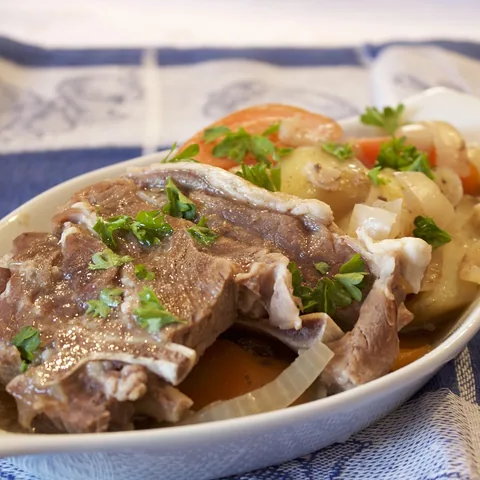
Despite its name, which means 'dry', seco de chivo is a saucy stew. Pieces of goat are slowly cooked in a sauce of onion, tomato, garlic, cumin and the tart juice of naranjilla, a local fruit, until the meat falls apart. The sauce is tangy, fruity and deeply savoury. It is served with yellow rice, fried ripe plantain and avocado.
Diets
Allergens
None of the 14 major allergens in a typical recipe.
What it is made of
Recipe
Ingredients
- 1.5 kg goat or lamb on the bone, in pieces
- 300 ml naranjilla juice (or passion fruit and lime)
- 2 onions, 1 pepper, chopped
- 3 tomatoes, blended
- 4 garlic cloves
- 1 tbsp cumin, 1 tsp achiote
- 1 bunch cilantro
- yellow rice and ripe plantain to serve
Method
- Marinate the meat with garlic, cumin, salt and half the naranjilla juice for a few hours.
- Brown the meat in a little oil and set aside.
- Soften the onions and pepper with achiote, then add the tomatoes.
- Return the meat with the remaining juice and a little water; cover.
- Simmer for about 1.5-2 hours until very tender, adding chopped cilantro at the end.
- Serve with yellow rice, fried ripe plantain and avocado.
How to make it lighter
- Trim visible fat from the meat before cooking.
- Bake the plantain instead of frying it.
- Serve a smaller rice portion with a fresh salad.
History
Seco is a family of stews shared with Peru, where similar dishes use cilantro and chicha. In Ecuador, the goat version is especially popular on the coast and at festive meals. Lamb is often used today instead of goat.
Count it in one photo
Point your camera at the table — Me Nutrition recognises Seco de chivo (Ecuadorian goat stew) and every other dish, with calories and macros for each. Ate only half? Slide it.
Download on the App StoreSimilar dishes
Values are estimates per 100 g for a typical recipe; home and restaurant versions vary. Diets and allergens are worked out from the ingredients of a typical recipe — always check with whoever cooked the dish. Not medical advice. Nutrition data: Me Nutrition dish database v15. How we count →