
Chashushuli (Georgian beef stew)
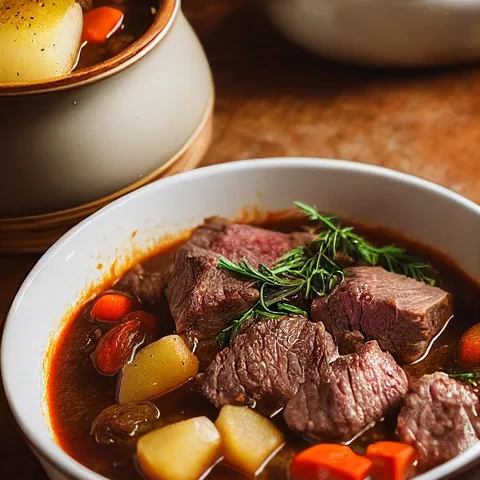
Chashushuli is a robust beef stew in which the meat slowly softens in a sauce of tomatoes, bell peppers and onions. Hot pepper and garlic give it a noticeable kick, while coriander and khmeli suneli add warmth. It is served in a clay dish with bread or mchadi alongside.
Diets
Allergens
None of the 14 major allergens in a typical recipe.
What it is made of
Recipe
Ingredients
- 800 g beef chuck
- 2 onions
- 3 bell peppers
- 600 g tomatoes
- 1–2 hot chilies
- 4 garlic cloves
- 1 tsp khmeli suneli, 30 g coriander, 1 tbsp oil, salt
Method
- Cut the beef into small cubes and brown in oil.
- Add chopped onions and cook until golden.
- Add sliced peppers and chopped tomatoes with salt.
- Cover and simmer for about 1 hour, until the beef is tender.
- Add chili, khmeli suneli and crushed garlic and cook 10 minutes.
- Finish with chopped coriander and serve.
How to make it lighter
- Use a lean cut and trim it well.
- Add more peppers and tomatoes to increase vegetable volume.
- Control the chili to suit sensitive stomachs.
History
The name broadly means a braised or stewed dish in Georgian. Versions with mushrooms or veal also exist, and it is a common item on Tbilisi restaurant menus.
Count it in one photo
Point your camera at the table — Me Nutrition recognises Chashushuli (Georgian beef stew) and every other dish, with calories and macros for each. Ate only half? Slide it.
Download on the App StoreSimilar dishes
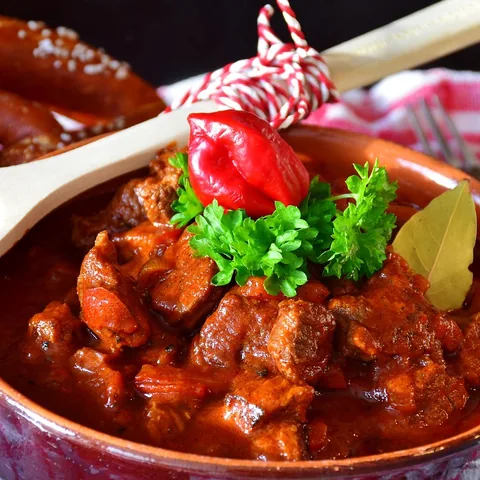
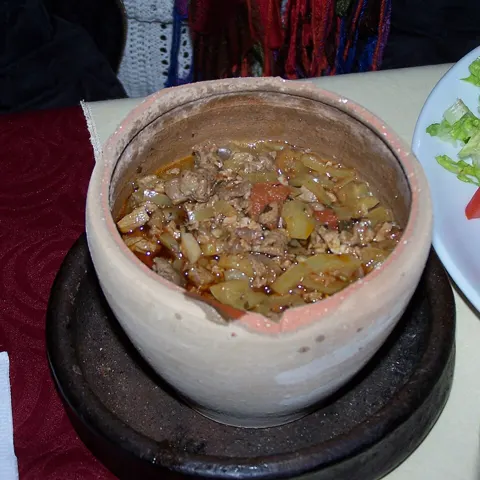
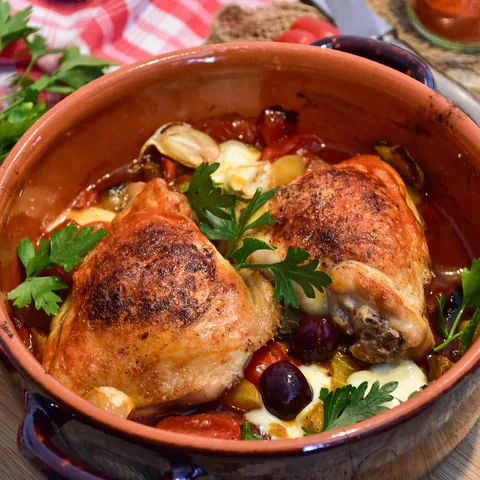
Values are estimates per 100 g for a typical recipe; home and restaurant versions vary. Diets and allergens are worked out from the ingredients of a typical recipe — always check with whoever cooked the dish. Not medical advice. Nutrition data: Me Nutrition dish database v15. How we count →