
Kharcho (beef and walnut soup)
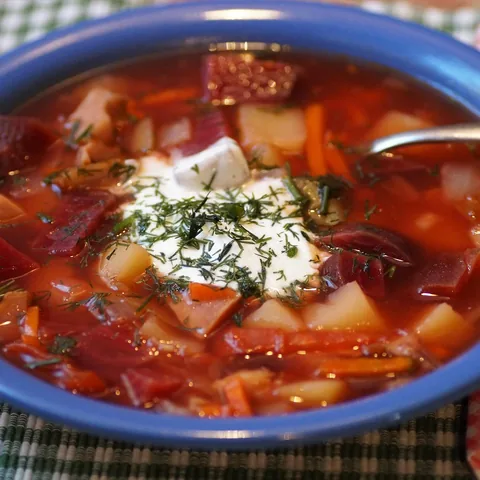
Kharcho is a hearty, reddish soup of beef simmered with rice, onions and tomato, thickened with ground walnuts. Tkemali gives it a sour note, while khmeli suneli, garlic and chili make it warming and gently spicy. Fresh coriander is stirred in at the end and it is eaten with bread.
Diets
Allergens
Contains (in a typical recipe):
What it is made of
Recipe
Ingredients
- 700 g beef brisket
- 100 g rice
- 100 g walnuts, ground
- 2 onions
- 2 tbsp tomato paste
- 100 ml tkemali
- 3 garlic cloves, 1 tsp khmeli suneli, chili, coriander, salt
Method
- Cover the beef with 2.5 litres of water, bring to a boil, skim and simmer 1.5 hours.
- Remove the meat, cut it up and return it to the strained broth.
- Add the rice and the chopped onions sautéed with tomato paste.
- After 15 minutes stir in the walnuts, tkemali, khmeli suneli and chili.
- Simmer 10 more minutes, adding crushed garlic at the end.
- Rest briefly and serve with chopped coriander.
How to make it lighter
- Chill the broth and remove the solid fat before finishing the soup.
- Halve the walnuts for fewer calories.
- Use brown rice for more fibre.
History
Kharcho is one of the best-known Georgian soups across the former Soviet Union. Its roots lie in western Georgia, especially Samegrelo, where walnut-thickened dishes are typical.
Count it in one photo
Point your camera at the table — Me Nutrition recognises Kharcho (beef and walnut soup) and every other dish, with calories and macros for each. Ate only half? Slide it.
Download on the App StoreSimilar dishes

Values are estimates per 100 g for a typical recipe; home and restaurant versions vary. Diets and allergens are worked out from the ingredients of a typical recipe — always check with whoever cooked the dish. Not medical advice. Nutrition data: Me Nutrition dish database v15. How we count →