
Khinkali with cheese
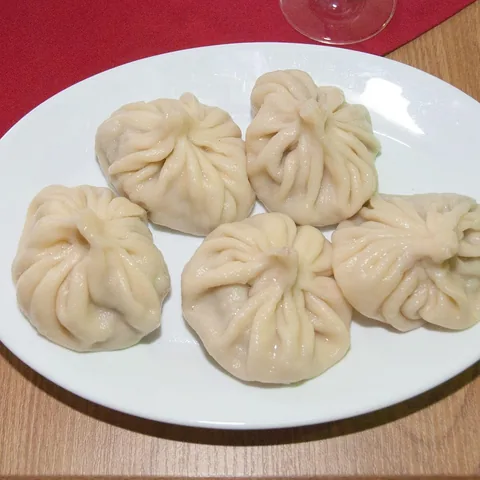
Cheese khinkali are filled with a mix of crumbled Imeretian cheese and sulguni, sometimes with a little cottage cheese and butter. When boiled, the cheese melts into a soft, stretchy centre; they can also be fried afterwards for a crisp golden skin. They are eaten hot by hand, like meat khinkali, often with black pepper.
Diets
Allergens
Contains (in a typical recipe):
What it is made of
Recipe
Ingredients
- 500 g flour
- 250 ml water
- 300 g Imeretian cheese
- 200 g sulguni
- 30 g butter
- salt and black pepper
Method
- Knead a firm dough from flour, water and salt and rest it for 30 minutes.
- Crumble or grate the cheeses and mix with soft butter.
- Roll the dough thin and cut out 10 cm circles.
- Put a spoonful of cheese in the centre, pleat the edges and twist closed.
- Boil in salted water for 8–10 minutes, or boil and then fry in a little butter until golden.
How to make it lighter
- Boil rather than fry them to avoid extra fat.
- Mix in cottage cheese to lower salt and fat while keeping protein.
- Pair with a crisp vegetable salad to balance the dough and cheese.
History
Khinkali originated in the mountainous regions of eastern Georgia, and cheese fillings are a later, widely loved variation. Leftover boiled khinkali are often fried the next day.
Count it in one photo
Point your camera at the table — Me Nutrition recognises Khinkali with cheese and every other dish, with calories and macros for each. Ate only half? Slide it.
Download on the App StoreSimilar dishes


Values are estimates per 100 g for a typical recipe; home and restaurant versions vary. Diets and allergens are worked out from the ingredients of a typical recipe — always check with whoever cooked the dish. Not medical advice. Nutrition data: Me Nutrition dish database v15. How we count →