
Chichinga (Ghanaian beef kebab)
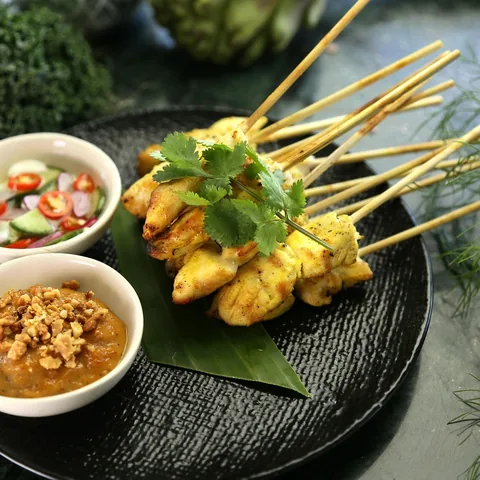
Chichinga is a Ghanaian street-food skewer of marinated beef, sometimes with onion, coated in yaji, a spice mix of ground roasted peanuts, ginger and chili. It is smoky, nutty and fiery. The skewers are grilled over charcoal and sold at night in markets and roadside stalls. They are served with sliced onion, tomato and extra spice powder.
Diets
Allergens
Contains (in a typical recipe):
What it is made of
Recipe
Ingredients
- 600 g beef sirloin
- 60 g roasted peanut powder (yaji)
- 20 g fresh ginger
- 100 g onion
- 5 g cayenne pepper
- 30 g vegetable oil
Method
- Slice beef thinly and thread onto skewers.
- Mix peanut powder with ginger, chili, salt and a little oil.
- Coat the skewers thoroughly and rest 30 minutes.
- Grill over hot coals 10 to 12 minutes, turning often.
- Dust with extra spice and serve with onion and tomato.
How to make it lighter
- Choose lean cuts and trim visible fat.
- Serve with a large salad rather than bread.
- Use less salt in the spice mix.
History
Chichinga is also known as khebab and is associated with the northern communities of Ghana and the Hausa tradition of suya. It is a popular evening snack in cities such as Accra and Kumasi.
Count it in one photo
Point your camera at the table — Me Nutrition recognises Chichinga (Ghanaian beef kebab) and every other dish, with calories and macros for each. Ate only half? Slide it.
Download on the App StoreSimilar dishes
Values are estimates per 100 g for a typical recipe; home and restaurant versions vary. Diets and allergens are worked out from the ingredients of a typical recipe — always check with whoever cooked the dish. Not medical advice. Nutrition data: Me Nutrition dish database v15. How we count →