
Hausa koko (spiced millet porridge)
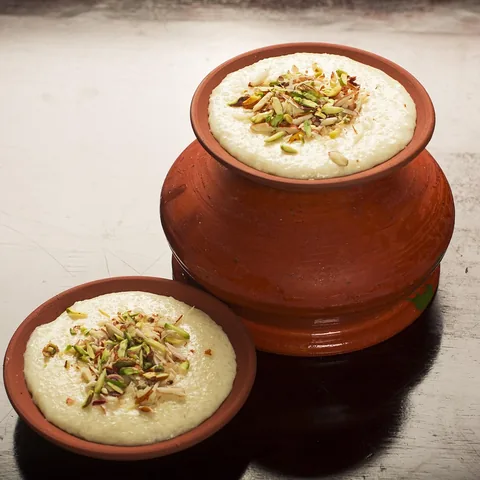
Hausa koko is a thin, smooth porridge of fermented millet flavoured with ginger, cloves and black pepper. It is warm, a little tangy and sweet, with a tingling peppery kick. It is ladled into a cup or bowl and drunk or eaten at dawn, often with koose, the bean fritters. Street vendors sell it in the early morning across Ghana.
Diets
Allergens
None of the 14 major allergens in a typical recipe.
What it is made of
Recipe
Ingredients
- 250 g millet grain
- 40 g fresh ginger
- 2 g cloves
- 2 g black pepper
- 60 g sugar
- 1500 g water
Method
- Soak the millet overnight, then grind with ginger, cloves and pepper into a paste.
- Leave the paste to ferment for 8 to 12 hours.
- Mix the paste with cold water and strain through a sieve.
- Heat the strained liquid, stirring until it thickens into a porridge.
- Sweeten with sugar and serve hot with koose.
How to make it lighter
- Use less sugar or sweeten with a little milk.
- Serve with grilled beans rather than fried fritters.
- Use whole millet for more fibre.
History
Hausa koko takes its name from the Hausa people of northern Nigeria and Niger, whose traders and migrants brought the porridge to Ghana. It is now a common breakfast in markets and towns across the country.
Count it in one photo
Point your camera at the table — Me Nutrition recognises Hausa koko (spiced millet porridge) and every other dish, with calories and macros for each. Ate only half? Slide it.
Download on the App StoreSimilar dishes



Values are estimates per 100 g for a typical recipe; home and restaurant versions vary. Diets and allergens are worked out from the ingredients of a typical recipe — always check with whoever cooked the dish. Not medical advice. Nutrition data: Me Nutrition dish database v15. How we count →