
Guobaorou (crispy sweet-sour pork)
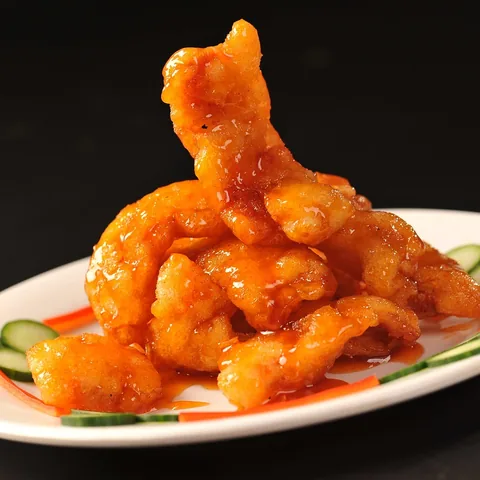
Guobaorou is made from thin slices of pork coated in a starch batter and double-fried until very crisp. They are tossed in a glossy sauce of vinegar and sugar with ginger, scallion and carrot threads. The contrast between the crunchy coating and tangy sauce is the point of the dish.
Diets
Allergens
Contains (in a typical recipe):
What it is made of
Recipe
Ingredients
- 400 g pork loin or tenderloin
- 100 g potato starch
- 200 ml vegetable oil for frying
- 3 tbsp rice vinegar
- 3 tbsp sugar
- 1 carrot, 1 scallion and ginger, cut into thin strips
Method
- Slice the pork thinly and marinate with salt and a splash of water for 10 minutes.
- Mix the starch with water to make a thick batter and coat the pork.
- Fry at 170 C for 3 minutes, remove, then fry again for 1 minute until crisp.
- Simmer vinegar, sugar and a spoon of starch slurry until glossy.
- Toss the pork in the sauce with the vegetable strips and serve immediately.
How to make it lighter
- Bake or air-fry the coated slices to cut the oil.
- Use less sugar in the sauce.
- Serve with extra vegetables and steamed rice.
History
The dish comes from the northeast of China and is often linked with Harbin. It is widely believed to have been adapted for foreign visitors in the early twentieth century, and it remains very popular in Dongbei restaurants.
Count it in one photo
Point your camera at the table — Me Nutrition recognises Guobaorou (crispy sweet-sour pork) and every other dish, with calories and macros for each. Ate only half? Slide it.
Download on the App StoreSimilar dishes
Values are estimates per 100 g for a typical recipe; home and restaurant versions vary. Diets and allergens are worked out from the ingredients of a typical recipe — always check with whoever cooked the dish. Not medical advice. Nutrition data: Me Nutrition dish database v15. How we count →