
Pate kode (Haitian fried pastry)
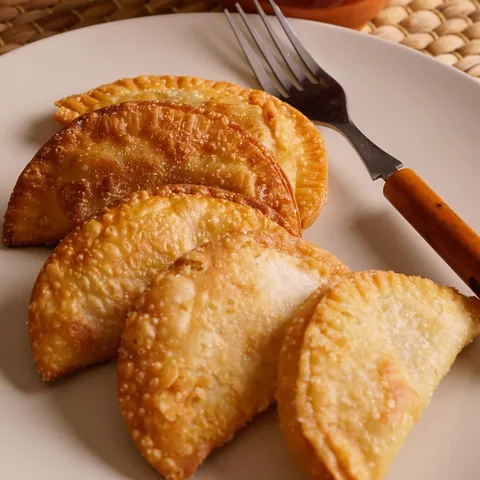
Pate kode are pocket pastries sold hot from roadside stalls across Haiti. A layered dough, rolled with butter or shortening so it puffs, is folded around a filling of smoked herring or seasoned beef and fried until blistered and golden. They are salty, rich and peppery, and are often eaten for breakfast or as a snack.
Diets
Allergens
Contains (in a typical recipe):
What it is made of
Recipe
Ingredients
- 400 g flour
- 200 g butter or shortening
- 150 ml cold water
- 1 tsp salt
- 200 g smoked herring, flaked
- 1 onion, chopped
- 1 scotch bonnet, minced
- Oil for frying
Method
- Mix flour and salt, work in half the fat and add water to form a dough.
- Roll out, spread with the rest of the fat, fold and chill; repeat once.
- Sauté onion and pepper and mix with the herring for the filling.
- Cut the dough into rounds and add filling to the center.
- Fold over and seal the edges.
- Fry in hot oil until golden and drain.
How to make it lighter
- Bake instead of frying.
- Soak the herring first to reduce salt.
- Serve with a salad rather than fried sides.
History
Pate kode is a classic of Haitian street food, sold at roadside stalls and in markets. The herring-filled version is especially common.
Count it in one photo
Point your camera at the table — Me Nutrition recognises Pate kode (Haitian fried pastry) and every other dish, with calories and macros for each. Ate only half? Slide it.
Download on the App StoreSimilar dishes

Values are estimates per 100 g for a typical recipe; home and restaurant versions vary. Diets and allergens are worked out from the ingredients of a typical recipe — always check with whoever cooked the dish. Not medical advice. Nutrition data: Me Nutrition dish database v15. How we count →