
Jericalla (Guadalajara baked custard)
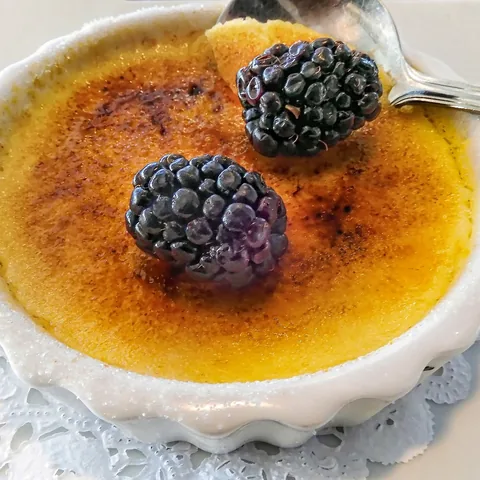
Jericalla is a simple custard of milk, eggs, sugar, cinnamon and vanilla, baked in small cups until set. The oven is hot enough to give the surface a dark, blistered, slightly bitter top that contrasts with the soft, smooth inside. It is served chilled or at room temperature and is a common sweet in markets and fondas of Guadalajara.
Diets
Allergens
Contains (in a typical recipe):
What it is made of
Recipe
Ingredients
- 1 l whole milk
- 5 eggs
- 180 g sugar
- 1 cinnamon stick
- 1 tsp vanilla extract
Method
- Warm the milk with the cinnamon and sugar, then let it infuse and cool slightly.
- Beat the eggs and slowly whisk in the warm milk; add the vanilla and strain.
- Pour into heatproof cups set in a deep tray of hot water.
- Bake at 180 °C for 40–45 minutes until set.
- Finish under a hot grill for a few minutes until the tops are dark brown, then chill.
How to make it lighter
- Use semi-skimmed milk; it still sets well.
- Reduce the sugar to 130 g; the cinnamon carries the flavour.
- Serve in small cups to keep portions modest.
History
Jericalla is closely linked to Guadalajara, where it is often described as having been created in a local orphanage kitchen as a nourishing treat for children. Whatever its exact origin, it is now regarded as one of the city's signature desserts.
Count it in one photo
Point your camera at the table — Me Nutrition recognises Jericalla (Guadalajara baked custard) and every other dish, with calories and macros for each. Ate only half? Slide it.
Download on the App StoreSimilar dishes
Values are estimates per 100 g for a typical recipe; home and restaurant versions vary. Diets and allergens are worked out from the ingredients of a typical recipe — always check with whoever cooked the dish. Not medical advice. Nutrition data: Me Nutrition dish database v15. How we count →