
Jerusalem mixed grill
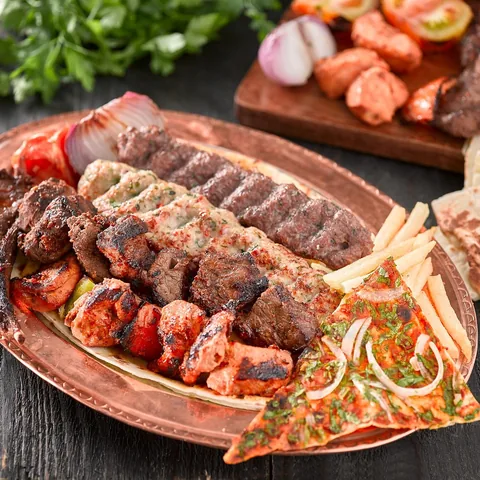
Jerusalem mixed grill is a sizzling mix of chicken hearts, livers and sometimes spleen or lamb, cooked on a hot flat griddle with onion, cumin, turmeric and paprika. The meat is rich, salty and slightly smoky. It is stuffed into a pita or served on a plate with salads and tahini.
Diets
Allergens
Contains (in a typical recipe):
What it is made of
Recipe
Ingredients
- 300 g chicken hearts
- 300 g chicken livers
- 300 g chicken breast, cut small
- 2 onions (300 g)
- 2 tsp cumin, 1 tsp turmeric, 1 tsp paprika
- 3 tbsp oil (45 ml), 4 pitas
Method
- Trim and cut the hearts and livers into bite-size pieces.
- Heat the oil on a large griddle or pan until very hot.
- Cook the hearts and chicken first for 8 minutes with the onion.
- Add the livers and spices and cook 5 more minutes.
- Season with salt and stir until browned.
- Serve in pita with salad, tahini and pickles.
How to make it lighter
- Use less oil and more onion.
- Serve with salad instead of fries.
- Choose more breast meat and fewer livers if you limit cholesterol.
History
The dish is a street-food specialty of Jerusalem, associated with Mahane Yehuda market and its grill houses. Its roots lie in the offal grills of Middle Eastern cities and the Jewish communities there.
Count it in one photo
Point your camera at the table — Me Nutrition recognises Jerusalem mixed grill and every other dish, with calories and macros for each. Ate only half? Slide it.
Download on the App StoreSimilar dishes


Values are estimates per 100 g for a typical recipe; home and restaurant versions vary. Diets and allergens are worked out from the ingredients of a typical recipe — always check with whoever cooked the dish. Not medical advice. Nutrition data: Me Nutrition dish database v15. How we count →