
Zarb (Bedouin underground lamb and vegetables)
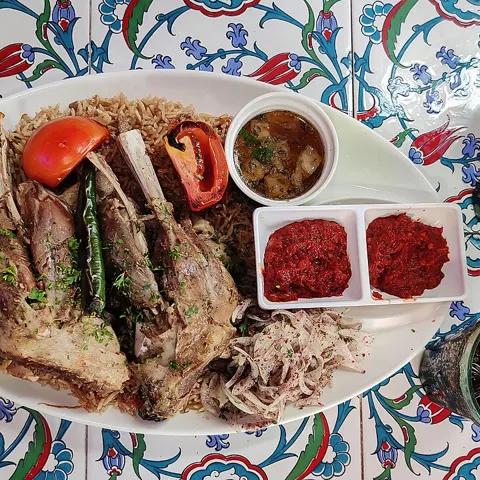
Zarb is a Bedouin feast in which marinated lamb or chicken with potatoes, carrots and onions is stacked on racks and lowered into a pit oven heated with embers. After a few hours the meat is falling off the bone with a gentle smoky aroma. It is served on a big platter with rice and eaten with the hands.
Diets
Allergens
None of the 14 major allergens in a typical recipe.
What it is made of
Recipe
Ingredients
- 1.5 kg lamb pieces
- 600 g potatoes
- 300 g carrots
- 2 onions
- 3 tomatoes
- 1 tsp cardamom, 1 tsp cumin
- Salt, pepper, 3 tbsp oil
Method
- Rub the lamb with spices, salt and oil and rest for an hour.
- Stack the meat and chopped vegetables on a rack and wrap in foil.
- Heat the oven or pit with embers until very hot.
- Cook slowly for 3 hours until the meat is tender.
- Unwrap and serve over rice.
How to make it lighter
- Trim visible fat from the lamb.
- Fill the rack with more vegetables and less meat.
- Serve with a plain yogurt and cucumber salad.
History
Zarb is a traditional dish of the Bedouin of Jordan, especially around Wadi Rum and Petra, prepared for guests and celebrations. Today it is also cooked for visitors in desert camps.
Count it in one photo
Point your camera at the table — Me Nutrition recognises Zarb (Bedouin underground lamb and vegetables) and every other dish, with calories and macros for each. Ate only half? Slide it.
Download on the App StoreSimilar dishes
Values are estimates per 100 g for a typical recipe; home and restaurant versions vary. Diets and allergens are worked out from the ingredients of a typical recipe — always check with whoever cooked the dish. Not medical advice. Nutrition data: Me Nutrition dish database v15. How we count →