
Karelian hot pot (Karjalanpaisti)
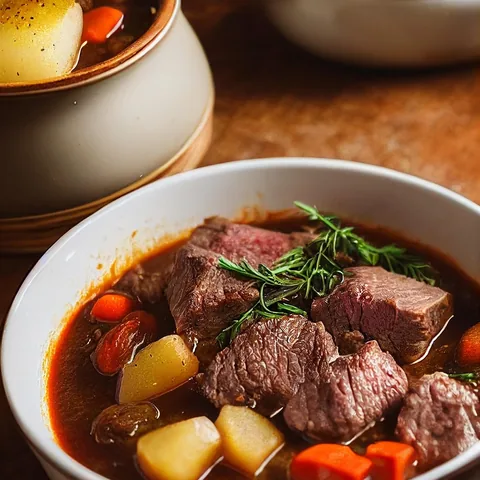
Karjalanpaisti is a hearty meat stew of beef and pork, and sometimes lamb, baked slowly with onion, allspice and bay leaf. There are no thickeners; the meat becomes meltingly tender in its own juices. It is traditionally served with mashed potatoes and pickled cucumbers or lingonberries.
Diets
Allergens
None of the 14 major allergens in a typical recipe.
What it is made of
Recipe
Ingredients
- 400 g beef
- 400 g pork
- 300 g onion
- 1 g allspice
- 2 pcs bay leaf
- 200 ml water
Method
- Cut the meat into 4 cm cubes and layer in a heavy pot with sliced onion.
- Add whole allspice, bay leaves, black pepper and salt.
- Pour in a little water, enough to just cover the bottom.
- Cover tightly and bake at 160 C for about 3 hours.
- Stir once or twice and add water only if the pot looks dry.
- Serve with mashed potatoes.
How to make it lighter
- Trim visible fat and skim the surface before serving.
- Add carrots to the pot for more vegetables.
- Serve with salad or root mash instead of buttery mashed potato.
History
The dish comes from Karelia, the eastern region of Finland, where it was a slow-cooked meal for family gatherings. It is now a common winter dish across Finland.
Count it in one photo
Point your camera at the table — Me Nutrition recognises Karelian hot pot (Karjalanpaisti) and every other dish, with calories and macros for each. Ate only half? Slide it.
Download on the App StoreSimilar dishes

Values are estimates per 100 g for a typical recipe; home and restaurant versions vary. Diets and allergens are worked out from the ingredients of a typical recipe — always check with whoever cooked the dish. Not medical advice. Nutrition data: Me Nutrition dish database v15. How we count →