
Ping kai (Lao grilled chicken)
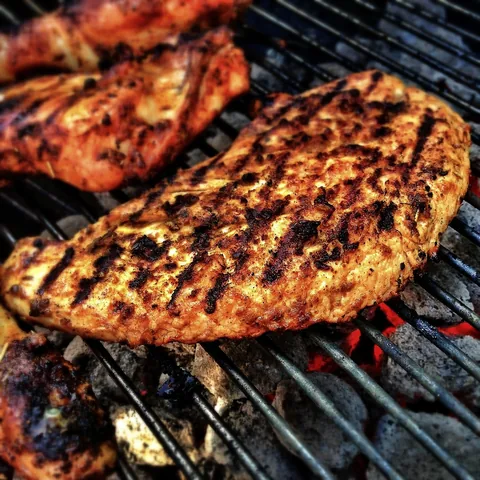
Ping kai is chicken marinated in a paste of garlic, lemongrass, cilantro root and pepper, then grilled slowly over charcoal. The skin turns burnished and the meat stays juicy with a gentle herbal fragrance. It is served with sticky rice and a sweet-sour chili sauce.
Diets
Allergens
Contains (in a typical recipe):
What it is made of
Recipe
Ingredients
- 1 kg chicken pieces
- 6 garlic cloves
- 2 stalks lemongrass
- 3 cilantro roots
- 2 tbsp fish sauce
- 1 tsp black pepper
- 1 tbsp oyster or soy sauce
Method
- Pound garlic, lemongrass, cilantro roots and pepper into a paste.
- Mix with fish sauce and soy sauce.
- Rub the paste over the chicken and marinate at least 2 hours.
- Grill on medium coals for 30-35 minutes, turning often.
- Rest 5 minutes and serve with sticky rice and chili sauce.
How to make it lighter
- Remove the skin to reduce fat.
- Grill on a rack so the fat drips away.
- Choose a sweet chili sauce sparingly or a fresh chili dip.
History
Grilled chicken is a staple of Lao roadsides and markets, and the same idea is shared with neighbouring Thailand. In Laos it is often eaten with the hands, in a communal meal with sticky rice.
Count it in one photo
Point your camera at the table — Me Nutrition recognises Ping kai (Lao grilled chicken) and every other dish, with calories and macros for each. Ate only half? Slide it.
Download on the App StoreSimilar dishes
Values are estimates per 100 g for a typical recipe; home and restaurant versions vary. Diets and allergens are worked out from the ingredients of a typical recipe — always check with whoever cooked the dish. Not medical advice. Nutrition data: Me Nutrition dish database v15. How we count →