
Lor mee (noodles in braised starchy gravy)
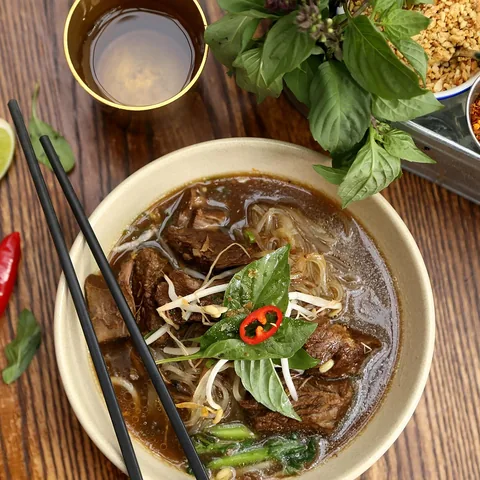
Lor mee is a bowl of thick yellow noodles in a dark, glossy, starch-thickened gravy. The gravy is made from the braising liquid of pork belly and eggs, flavoured with five-spice, soy and garlic. It is topped with sliced braised pork, a braised egg and fried fish pieces, with black vinegar and crushed garlic added at the table.
Diets
Allergens
Contains (in a typical recipe):
What it is made of
Recipe
Ingredients
- 300 g thick yellow noodles
- 300 g pork belly
- 4 eggs, boiled
- 3 tbsp soy sauce
- 1 tsp five-spice powder
- 6 garlic cloves
- 2 tbsp cornstarch
- black vinegar, chilies
Method
- Simmer pork belly with soy, five-spice and garlic for 1 hour; add eggs for the last 20 minutes.
- Remove meat and eggs and slice them.
- Thicken the braising liquid with cornstarch slurry and a beaten egg.
- Blanch the noodles and place in bowls.
- Ladle on the gravy, add pork and egg, then vinegar and garlic.
How to make it lighter
- Use lean pork or chicken instead of belly.
- Skim fat off the braising liquid.
- Add blanched greens.
History
The dish is of Hokkien origin and is popular among the Chinese communities of Malaysia and Singapore. Its name roughly means braised noodles, after the thick sauce.
Count it in one photo
Point your camera at the table — Me Nutrition recognises Lor mee (noodles in braised starchy gravy) and every other dish, with calories and macros for each. Ate only half? Slide it.
Download on the App StoreSimilar dishes
Values are estimates per 100 g for a typical recipe; home and restaurant versions vary. Diets and allergens are worked out from the ingredients of a typical recipe — always check with whoever cooked the dish. Not medical advice. Nutrition data: Me Nutrition dish database v15. How we count →