
Salsa roja (roasted red salsa)
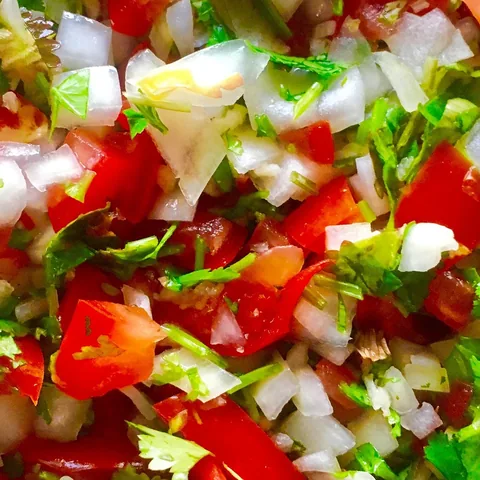
Salsa roja is the everyday red sauce found on almost every Mexican table. Tomatoes, chiles, onion and garlic are charred on a dry griddle, then blended into a loose, smoky sauce with a lively heat. It is spooned over tacos, eggs, grilled meat and beans, or simply eaten with tortilla chips.
Diets
Allergens
None of the 14 major allergens in a typical recipe.
What it is made of
Recipe
Ingredients
- 500 g ripe tomatoes
- 2–4 serrano or árbol chiles
- 1/4 white onion (40 g)
- 2 garlic cloves
- 10 g cilantro
- 1 tsp salt
- juice of 1/2 lime
Method
- Heat a dry heavy pan or comal over high heat.
- Char the tomatoes, chiles, onion and unpeeled garlic, turning, until blistered and blackened in spots.
- Peel the garlic and remove chile stems.
- Blend everything with salt to a slightly chunky sauce, adding a splash of water if needed.
- Stir in chopped cilantro and lime juice, taste and adjust heat and salt.
How to make it lighter
- It is naturally very low in calories, so use it generously instead of creamy sauces.
- Seed the chiles if you want the flavour without too much heat.
- Cut back the salt and let lime and roasted garlic carry the taste.
History
Mexican cooks have ground tomatoes and chiles together since pre-Hispanic times, traditionally in a stone molcajete. Every household and taquería has its own version, and the choice of chile largely defines the flavour.
Count it in one photo
Point your camera at the table — Me Nutrition recognises Salsa roja (roasted red salsa) and every other dish, with calories and macros for each. Ate only half? Slide it.
Download on the App StoreSimilar dishes
Values are estimates per 100 g for a typical recipe; home and restaurant versions vary. Diets and allergens are worked out from the ingredients of a typical recipe — always check with whoever cooked the dish. Not medical advice. Nutrition data: Me Nutrition dish database v15. How we count →