
Caldo de albóndigas (Mexican meatball soup)
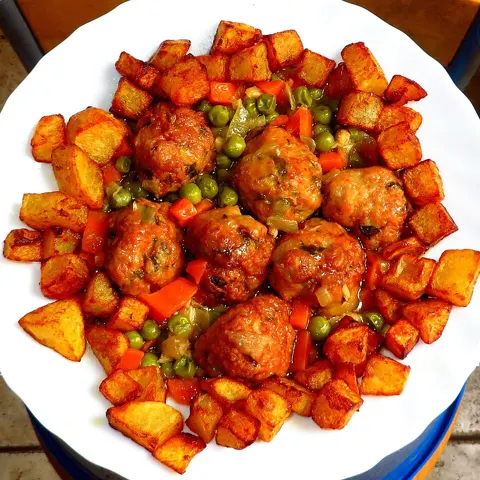
Caldo de albóndigas is a homely soup of small beef meatballs bound with rice and egg and flavoured with fresh mint. They poach in a light tomato broth together with chunks of carrot, zucchini and potato until everything is tender. It is served with lime, chopped onion and a spoonful of salsa or a few chiles for those who want heat.
Diets
Allergens
Contains (in a typical recipe):
What it is made of
Recipe
Ingredients
- 500 g lean minced beef
- 50 g raw rice, rinsed
- 1 egg
- 2 tbsp chopped mint
- 3 tomatoes
- 1/2 onion, 2 garlic cloves
- 2 carrots, 2 zucchini, 2 potatoes, all in chunks
- 1.8 l broth
- Salt, lime
Method
- Mix the beef, rice, egg, mint and salt and roll into small meatballs.
- Blend the tomatoes, onion and garlic and bring to a boil with the broth.
- Drop in the meatballs and simmer 20 minutes without stirring.
- Add the carrots and potatoes and cook 10 minutes, then the zucchini for 8 more.
- Serve hot with lime and chopped onion.
How to make it lighter
- Use minced turkey or chicken for fewer calories.
- Add more vegetables and fewer potatoes.
- Skim the broth before adding the vegetables.
History
Meatball soup is common across Mexico and in Mexican-American kitchens, where it is a typical family meal on cold days. The use of mint and raw rice inside the meatballs is characteristic of the Mexican version.
Count it in one photo
Point your camera at the table — Me Nutrition recognises Caldo de albóndigas (Mexican meatball soup) and every other dish, with calories and macros for each. Ate only half? Slide it.
Download on the App StoreSimilar dishes
Values are estimates per 100 g for a typical recipe; home and restaurant versions vary. Diets and allergens are worked out from the ingredients of a typical recipe — always check with whoever cooked the dish. Not medical advice. Nutrition data: Me Nutrition dish database v15. How we count →