
Tacos árabes (Puebla spit-roasted pork)
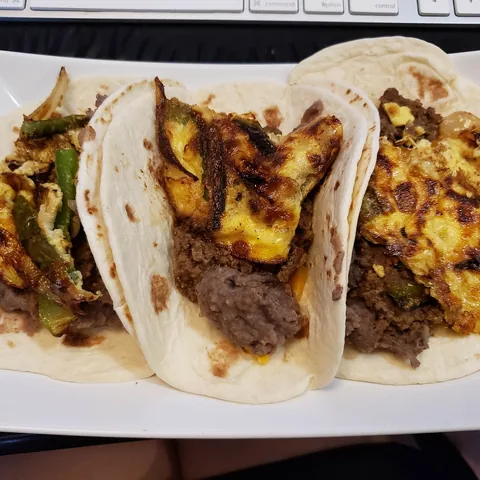
Tacos árabes are made from thin slices of pork marinated with onion, lime, oregano and spices, stacked on a vertical spit and roasted until the edges caramelise. Instead of corn tortillas, the meat is wrapped in pan árabe, a soft wheat flatbread a little thicker than a flour tortilla. A dark chipotle salsa and a squeeze of lime are the classic finish.
Diets
Allergens
Contains (in a typical recipe):
What it is made of
Recipe
Ingredients
- 1 kg pork leg or shoulder, thinly sliced
- 1 onion, grated
- juice of 3 limes
- 1 tsp dried oregano, 1 tsp cumin
- 2 tbsp oil
- 8 pan árabe or thick flour flatbreads
- chipotle salsa and lime to serve
Method
- Mix the onion, lime juice, oregano, cumin, oil, salt and pepper.
- Coat the pork slices and marinate for at least 2 hours.
- Stack the slices tightly on a skewer, or press into a loaf pan.
- Roast at 200 °C for about 60–70 minutes until browned at the edges.
- Slice thinly and briefly crisp the slices in a hot pan.
- Warm the flatbreads, fill with pork and serve with chipotle salsa and lime.
How to make it lighter
- Use lean pork leg rather than shoulder.
- Serve with a big side of sliced cucumber and radish.
- Thin the chipotle salsa with tomato to keep it lighter and less fiery.
History
The dish grew out of the shawarma brought to Puebla by Lebanese and other Middle Eastern immigrants in the early twentieth century. Local cooks swapped lamb for pork and Mexican chiles, and the style later inspired the better-known tacos al pastor.
Count it in one photo
Point your camera at the table — Me Nutrition recognises Tacos árabes (Puebla spit-roasted pork) and every other dish, with calories and macros for each. Ate only half? Slide it.
Download on the App StoreSimilar dishes
Values are estimates per 100 g for a typical recipe; home and restaurant versions vary. Diets and allergens are worked out from the ingredients of a typical recipe — always check with whoever cooked the dish. Not medical advice. Nutrition data: Me Nutrition dish database v15. How we count →