
Compot de fructe (Moldovan fruit compote)
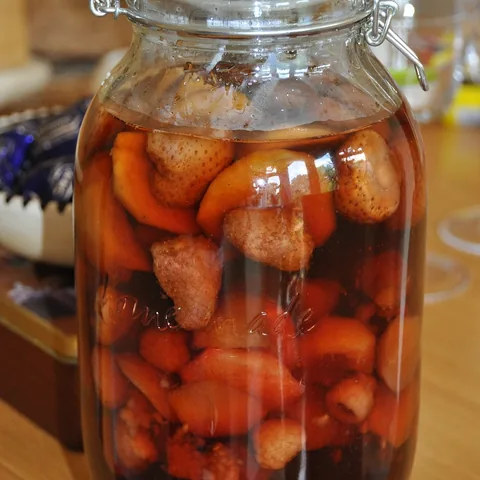
Compot is a light, non-alcoholic drink made by simmering seasonal fruit such as apples, cherries, plums or apricots in water with a little sugar. It is served cold in summer and warm in winter, with some of the soft fruit left in the glass. In Moldova families also preserve it in jars to drink through the winter.
Diets
Allergens
None of the 14 major allergens in a typical recipe.
What it is made of
Recipe
Ingredients
- 1.5 l water
- 300 g apples
- 200 g cherries or plums
- 80 g sugar
- 1/2 lemon
- 1 cinnamon stick
Method
- Wash the fruit, core the apples and cut them into wedges.
- Bring the water and sugar to a boil.
- Add the apples and the cinnamon and simmer for 10 minutes.
- Add the cherries and lemon and simmer 5 minutes more.
- Remove from the heat, cover and let it steep for 1 hour.
- Chill and serve with some of the fruit.
How to make it lighter
- Cut the sugar by half when the fruit is ripe and sweet.
- Add a few mint leaves for freshness.
- Eat the fruit from the glass for extra fibre.
History
Fruit compotes are part of everyday eating all over Eastern Europe, and Moldova's orchards and vineyards make the drink especially common. Jars of compot are a standard way of keeping the summer harvest.
Count it in one photo
Point your camera at the table — Me Nutrition recognises Compot de fructe (Moldovan fruit compote) and every other dish, with calories and macros for each. Ate only half? Slide it.
Download on the App StoreSimilar dishes

Values are estimates per 100 g for a typical recipe; home and restaurant versions vary. Diets and allergens are worked out from the ingredients of a typical recipe — always check with whoever cooked the dish. Not medical advice. Nutrition data: Me Nutrition dish database v15. How we count →