
Nigerian tomato stew (obe ata)
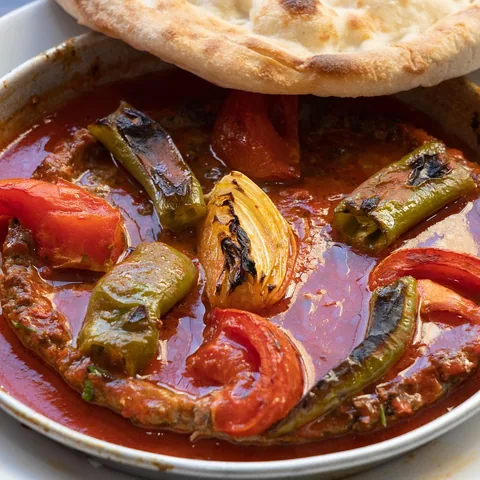
Obe ata is the basic red stew of Nigerian homes. Tomatoes, red peppers and onions are blended and fried slowly in oil until the raw taste is gone and the colour deepens. Chicken or beef is added for flavour. It is tangy, peppery and rich, and goes over rice, yam, plantain or beans.
Diets
Allergens
None of the 14 major allergens in a typical recipe.
What it is made of
Recipe
Ingredients
- 1000 g fresh tomatoes
- 300 g red bell peppers
- 3 g scotch bonnet peppers
- 300 g onions
- 100 g vegetable oil
- 800 g chicken pieces
- 2 g dried thyme and bay leaf
- stock cubes and salt
Method
- Boil the chicken with onion, thyme and seasoning until nearly done; fry or grill it briefly.
- Blend tomatoes, peppers, scotch bonnet and one onion.
- Cook the blend in a dry pot until the water evaporates and it thickens.
- Heat oil, fry sliced onion, add the thick blend and fry 20 minutes until the oil rises.
- Add the chicken and a little stock and simmer 10 minutes.
How to make it lighter
- Use less palm oil and skim the surface to cut saturated fat.
- Choose lean meat or fish and add extra leafy greens.
- Season with spices and herbs to reduce salt and stock cubes.
History
The stew is the base of many Nigerian dishes, including jollof rice. Its quality is judged by how well the oil separates and how little sourness remains.
Count it in one photo
Point your camera at the table — Me Nutrition recognises Nigerian tomato stew (obe ata) and every other dish, with calories and macros for each. Ate only half? Slide it.
Download on the App StoreSimilar dishes

Values are estimates per 100 g for a typical recipe; home and restaurant versions vary. Diets and allergens are worked out from the ingredients of a typical recipe — always check with whoever cooked the dish. Not medical advice. Nutrition data: Me Nutrition dish database v15. How we count →