
Lutefisk (Norwegian lye-cured cod)
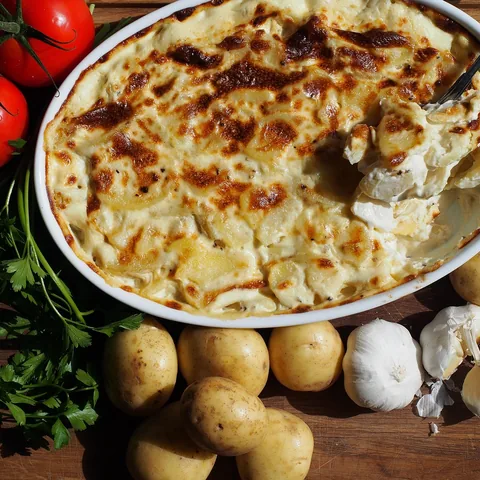
Lutefisk is dried cod that has been soaked in a lye solution until it turns soft and jelly-like. It is boiled or baked and served with bacon, mushy peas, potatoes and melted butter. The taste is very mild and the texture is delicate, which is why strong sides are common. It is a Christmas-season tradition in Norway.
Diets
Allergens
Contains (in a typical recipe):
What it is made of
Recipe
Ingredients
- 600 g lutefisk, soaked and rinsed
- 200 g bacon
- 300 g green peas
- 800 g potatoes
- 60 g butter
- Salt and pepper
Method
- Rinse the soaked lutefisk well in cold water several times.
- Peel and boil the potatoes in salted water until tender.
- Place the fish in a pan with a little salted water or wrap it in foil and cook at 200 C for 25 minutes.
- Fry the bacon until crisp and warm the peas, lightly mashed.
- Plate the fish with potatoes, peas and bacon and pour over melted butter.
How to make it lighter
- Use less bacon and butter to cut the fat noticeably.
- Serve with extra peas and boiled vegetables for more fibre.
- Rinse the fish thoroughly so it does not stay too salty.
History
Lutefisk grew out of the old Nordic practice of preserving stockfish. It is now mostly eaten in the weeks before Christmas, and Norwegian emigrants carried the tradition to the American Midwest.
Count it in one photo
Point your camera at the table — Me Nutrition recognises Lutefisk (Norwegian lye-cured cod) and every other dish, with calories and macros for each. Ate only half? Slide it.
Download on the App StoreSimilar dishes
Values are estimates per 100 g for a typical recipe; home and restaurant versions vary. Diets and allergens are worked out from the ingredients of a typical recipe — always check with whoever cooked the dish. Not medical advice. Nutrition data: Me Nutrition dish database v15. How we count →