
Pan de muerto (Day of the Dead bread)
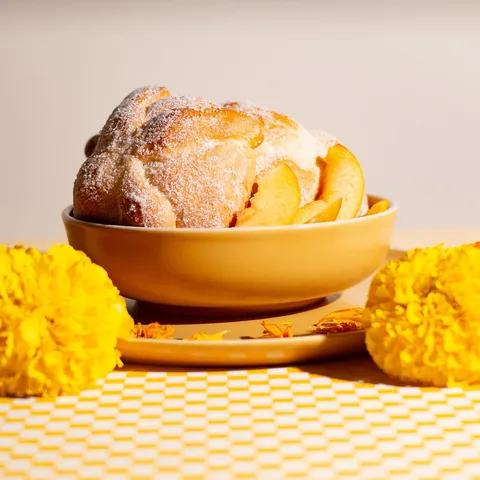
Pan de muerto is a round, rich yeast bread flavoured with orange zest and orange blossom water, topped with strips of dough shaped like bones and a small ball on top. After baking it is brushed with butter and rolled in sugar. It is eaten in late October and early November, often with hot chocolate, and placed on family altars.
Diets
Allergens
Contains (in a typical recipe):
What it is made of
Recipe
Ingredients
- 500 g flour
- 100 g sugar
- 120 g butter
- 4 eggs
- 10 g dried yeast
- 80 ml warm milk
- zest of 1 orange, 1 tbsp orange blossom water
- 40 g butter and 50 g sugar for finishing
Method
- Mix flour, sugar, yeast, zest, eggs, milk and orange blossom water, then knead in the butter.
- Let rise for about 2 hours until doubled.
- Set aside a quarter of the dough; shape the rest into two round loaves.
- Roll the reserved dough into bone-shaped strips and small balls and stick them on top with water.
- Rise 40 minutes, bake at 180 °C for 25–30 minutes, then brush with melted butter and dust with sugar.
How to make it lighter
- Skip the sugar coating or use only a light dusting.
- Share a loaf; one small slice is enough with coffee.
- Use part whole-wheat flour for extra fibre.
History
The bread is closely linked to the Día de Muertos celebrations, when families honour their deceased relatives. Its shape and decorations vary by region, and many bakeries offer it only during the season.
Count it in one photo
Point your camera at the table — Me Nutrition recognises Pan de muerto (Day of the Dead bread) and every other dish, with calories and macros for each. Ate only half? Slide it.
Download on the App StoreSimilar dishes
Values are estimates per 100 g for a typical recipe; home and restaurant versions vary. Diets and allergens are worked out from the ingredients of a typical recipe — always check with whoever cooked the dish. Not medical advice. Nutrition data: Me Nutrition dish database v15. How we count →