
Pollo pibil (achiote chicken in banana leaf)
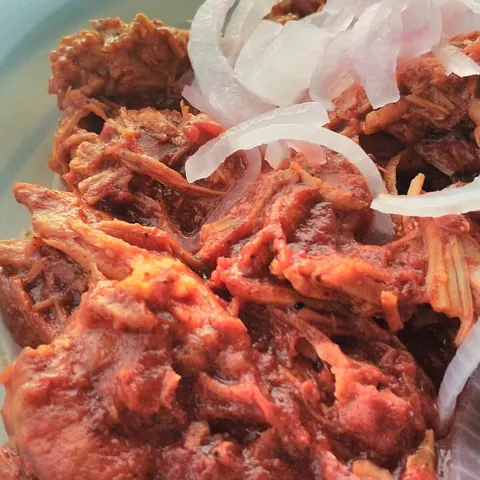
Pollo pibil is the chicken version of the famous Yucatecan pibil method: pieces are rubbed with recado rojo, a paste of ground achiote seeds, spices and sour orange juice, then wrapped in banana leaves and baked slowly. The meat turns tender, brick-red and gently tangy with an earthy, peppery note from the achiote. It is served with pickled red onion, habanero salsa and warm tortillas.
Diets
Allergens
None of the 14 major allergens in a typical recipe.
What it is made of
Recipe
Ingredients
- 1.2 kg chicken thighs and legs, skin removed
- 100 g achiote paste (recado rojo)
- 200 ml sour orange juice (or orange and lime)
- 4 garlic cloves
- 1 tsp oregano, ½ tsp cumin
- banana leaves
- pickled red onion and tortillas to serve
Method
- Dissolve the achiote paste in the citrus juice with garlic, oregano, cumin and salt.
- Coat the chicken and marinate at least 2 hours, ideally overnight.
- Pass the banana leaves briefly over a flame to soften them.
- Line a dish with leaves, add the chicken and marinade and fold the leaves over.
- Cover with foil and bake at 170 °C for about 1½ hours.
- Shred or serve in pieces with pickled onion, salsa and tortillas.
How to make it lighter
- Use skinless breast for an even leaner dish.
- Serve with black beans and salad instead of rice.
- Skim the fat from the cooking juices before spooning them over.
History
Pibil comes from the Maya word for an earth oven, the pib, in which food is buried with hot stones. Families in the Yucatán still cook this way for special occasions, while most home cooks now use a conventional oven.
Count it in one photo
Point your camera at the table — Me Nutrition recognises Pollo pibil (achiote chicken in banana leaf) and every other dish, with calories and macros for each. Ate only half? Slide it.
Download on the App StoreSimilar dishes
Values are estimates per 100 g for a typical recipe; home and restaurant versions vary. Diets and allergens are worked out from the ingredients of a typical recipe — always check with whoever cooked the dish. Not medical advice. Nutrition data: Me Nutrition dish database v15. How we count →